
Blog / Insights
InsightsStop Refreshing the Page and Learn How to Check Your Refund Status
October 14, 2026 · 8 min read · By the SFG Capital team
Check Whether Your Refund Has Been Processed
To check whether a federal individual tax refund has been processed, use the IRS Where’s My Refund? tool or the IRS2Go app. Enter your Social Security number or ITIN, filing status, and the exact whole-dollar refund amount from your return. The tracker will show whether the IRS has received, approved, or sent your refund.
You can usually check within 24 hours of e-filing a current-year return, or about four weeks after mailing a paper return. The status updates once daily, usually overnight, so refreshing the page all day will not produce new information.
If you are waiting on an ERC or another business tax credit refund, note that the standard individual refund tracker may not apply. Business refund questions often require a different IRS process and longer review timelines.
I am Santino Battaglieri, founder of SFG Capital, with more than nine years of financial-services experience and extensive work supporting ERC transactions. This guide explains how to check if my refund has been processed while helping business owners understand the difference between individual refund tracking and business credit claims.
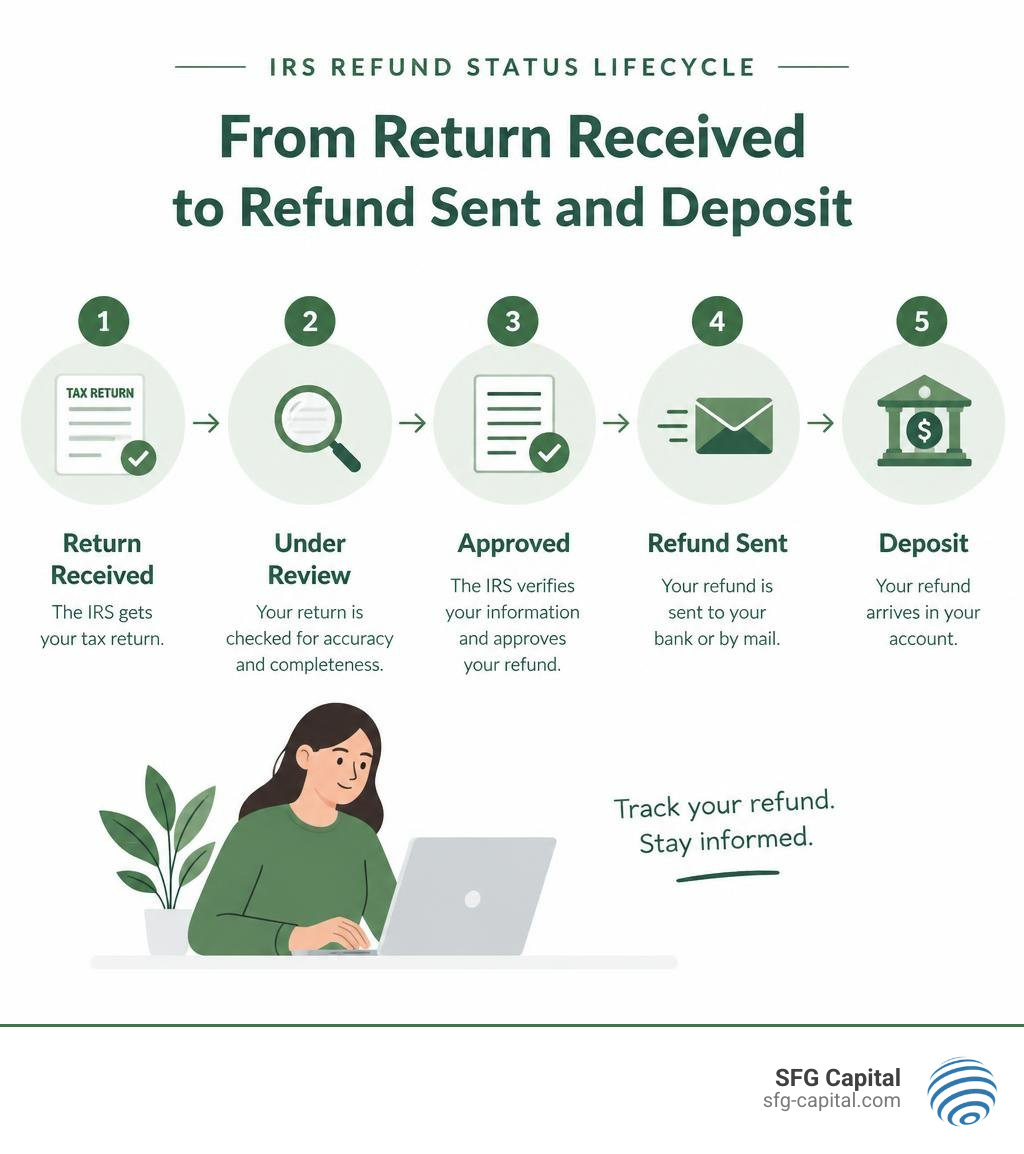
Handy how to check if my refund has been processed terms:
- average time for irs to approve refund
- how come my federal refund is taking so long
- irs time to process tax return
When Can You Track Your Tax Return and What Information Is Needed?

Before you sit down to check your status, you need to make sure the IRS system is ready to recognize your return. The timeline for when your data becomes searchable depends entirely on how you filed:
- Current-Year E-Filed Returns: Available within 24 hours after the IRS acknowledges receipt of your transmission.
- Prior-Year E-Filed Returns: Searchable within 3 to 4 days after electronic submission.
- Mailed Paper Returns: Requires roughly 4 weeks after mailing before the system registers your paperwork.
Trying to check an e-filed return two hours after hitting submit will only result in an error message, as the system needs overnight batch processing to register the filing.
To look up your record without running into authentication roadblocks, gather three specific items from your copy of Form 1040:
- Taxpayer Identification Number: Your Social Security Number (SSN) or Individual Taxpayer Identification Number (ITIN). If filing jointly, enter the primary taxpayer’s number listed first on the return.
- Filing Status: The exact status selected on your return (Single, Married Filing Jointly, Married Filing Separately, Head of Household, or Qualifying Surviving Spouse).
- Exact Refund Amount: The whole-dollar refund figure shown on your return. Entering an estimated or rounded number will prevent the system from matching your file.
According to official guidelines on About Where’s My Refund? | Internal Revenue Service, entering this data accurately ensures instant access to your return’s current processing milestone.
Step-by-Step Guide: How to Check If My Refund Has Been Processed Online and Offline
The IRS maintains automated databases synchronized with the Bureau of the Fiscal Service—the Treasury branch responsible for issuing payments. Because the core database updates only once every 24 hours (usually overnight), checking your status once per day is sufficient.
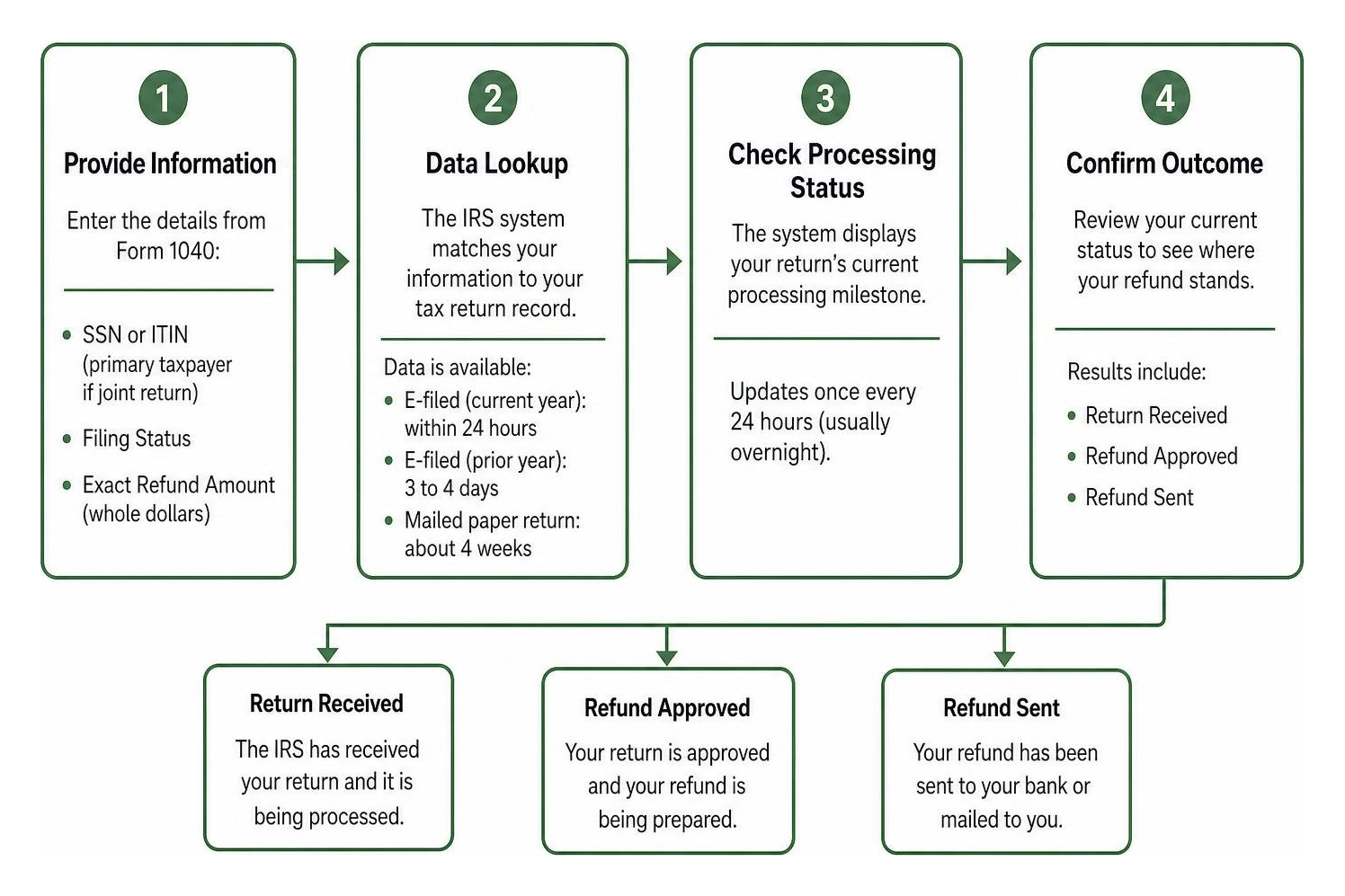
Using IRS Online Tools: How to Check If My Refund Has Been Processed Without Signing In
You do not need to create an account or complete complex identity verification steps just to see if your refund has cleared processing. The public web portal provides real-time tracking with minimal input.
- Navigate to the official Refunds | Internal Revenue Service portal.
- Select the option to Check your refund.
- Input your SSN or ITIN, select your filing status from the dropdown menu, enter the exact expected whole-dollar refund amount, and choose the tax year.
- Submit the form to view your current status bar.
If you prefer a comprehensive overview of your broader tax profile—including account transcripts, prior-year records, payment histories, and direct digital notices—you can sign in to your IRS Individual Online Account. An online account also allows you to opt in to email notifications when processing milestones change.
Mobile Apps and Automated Phone Lines: How to Check If My Refund Has Been Processed on the Go

For filers who prefer mobile or offline tracking, the IRS provides accessible tools:
- IRS2Go Mobile App: The official IRS mobile application (available for iOS and Android in English and Spanish) features a dedicated “Check your refund” tool. It requires the same three pieces of information (SSN, filing status, refund amount) and delivers identical status updates as the desktop website without requiring a login.
- Automated Phone System: If you do not have internet access, call the IRS automated refund hotline at 800-829-1954. The interactive voice-response system will prompt you to enter your SSN, filing status, and refund amount using your telephone keypad.
Both phone representatives and digital tools draw from the same master database, so phone representatives cannot provide different or faster updates than what appears online.
Understanding the 3 Stages of IRS Refund Processing and Expected Timelines
When you check your status, the IRS tracker displays a visual progress tracker across three primary stages:
| Refund Stage | Meaning | Typical Timeline | Action Required |
|---|---|---|---|
| 1. Return Received | The IRS has your return and is verifying math, identity, and credits. | 24 hours to 21 days after e-filing | None. The return is progressing normally through review. |
| 2. Refund Approved | Review is complete, calculations are verified, and the refund is authorized. | Within 21 days for e-filers | Check the personalized payment release date provided on screen. |
| 3. Refund Sent | The Bureau of the Fiscal Service has sent the payment via direct deposit or paper check. | 1–5 business days for direct deposit; several days for mail delivery | Monitor your bank account or mailbox. |
Most electronically filed returns with direct deposit are processed in less than 21 days. Mailed paper returns generally take 6 weeks or longer to process.
Even after the tracker moves to “Refund Sent,” your financial institution may take an additional 2 to 5 business days to post the direct deposit into your available balance, as banks do not settle federal automated clearing house (ACH) transfers on weekends or federal holidays.
Tracking Amended and Business Tax Returns
Standard individual tracking tools are designed strictly for original Form 1040 submissions. If you submitted an adjusted filing or a corporate tax claim, different systems apply:
- Amended Returns (Form 1040-X): Amended individual returns require specialized processing. Track these using the separate “Where’s My Amended Return?” web tool or by calling 866-464-2050. Amended returns typically require 16 to 20 weeks to process.
- Business Tax Returns & Payroll Credits: Business income filings (such as Form 1120 or 1065) and payroll tax refund claims (such as Form 941-X for the Employee Retention Credit) cannot be tracked via the online “Where’s My Refund?” tool. Business filers must call the dedicated IRS Business and Specialty Tax Line at 800-829-4933.
Why Is Your Refund Delayed, Reduced, or Missing?
If your refund takes longer than 21 days or arrives with a different dollar amount than expected, one of several common administrative factors is likely responsible:
- Statutory Credit Holds (PATH Act): By law, the IRS cannot issue refunds claiming the Earned Income Tax Credit (EITC) or Additional Child Tax Credit (ACTC) before mid-February, giving the agency time to stop fraudulent refund claims.
- Filing Discrepancies: Simple errors such as missing signatures, incorrect dependent identification numbers, or basic calculation mistakes trigger manual reviews that extend processing times.
- Identity and Security Verification: Returns flagged by fraud-detection algorithms require the filer to complete an identity verification process before the refund can be released.
- Treasury Offset Program (TOP): If you owe past-due federal taxes, state income tax liabilities, back child support, or non-tax federal debts (like certain student loans), the Bureau of the Fiscal Service reduces your refund to satisfy the balance. In these cases, the agency mails a formal notice detailing the original refund amount, the offset deduction, and the net payment issued.
What to Do If Your Refund Check Is Lost or Stolen
If the tracker indicates that a paper check was mailed but you never received it, you can request an official IRS refund trace:
- Verify the Waiting Period: You must wait at least 28 days from the date the IRS mailed the check before the system will accept a trace request.
- Submit a Trace: You can initiate a trace online using the Where’s My Refund tool, by calling 800-829-1954, or by completing and submitting Form 3911 (Taxpayer Statement Regarding Refund).
- Claim Resolution: If the check was uncashed, the IRS cancels the original check and issues a replacement. If the check was fraudulently cashed, the Treasury’s Bureau of the Fiscal Service conducts an investigation and provides a claim package with a copy of the check for signature verification before issuing a replacement.
Frequently Asked Questions About Tax Refund Status
Does calling the IRS speed up my refund processing?
No. IRS telephone representatives use the same database that powers the online tools and mobile app. Unless your tracking status specifically instructs you to contact customer support or more than 21 days have elapsed since your e-filed submission, calling will not expedite your claim.
How often does the IRS update refund status each day?
The IRS updates refund processing statuses once per day, usually overnight between midnight and 6:00 AM. Checking your status multiple times throughout the day will show the same result.
Why is my refund amount different from what I originally filed?
Discrepancies occur when the IRS adjusts figures to correct math errors, disallows unverified tax credits, or routes portions of your payment to cover outstanding obligations through the Treasury Offset Program. When adjustments occur, the IRS issues an explanatory letter via postal mail.
Conclusion
Checking on your federal refund does not require complicated logins or constant screen refreshing. By utilizing official IRS self-service tools like the Where’s My Refund portal or the IRS2Go mobile app, you can confirm whether your return is received, approved, or on its way. For the fastest turnaround on personal filings, always opt for electronic filing paired with direct deposit.
While individual tax refunds generally follow a predictable 21-day timeline, business tax credit claims face extended review periods. For business owners navigating complex payroll credit filings, our specialized funding services at SFG Capital provide direct buyouts and advance options to unlock liquidity without waiting through long administrative processing queues.
See what your business may qualify for.
60 seconds. No documents. No upfront cost.
General information only, not legal or tax advice. Eligibility and estimates are fact-specific and subject to review.