
Blog / Insights
InsightsThe City of Austin Payroll Fix Guide
October 21, 2026 · 7 min read · By the SFG Capital team
Understanding the $1.4M City Payroll Glitch and Overpayment Root Cause
Resolving an Austin employee credit refund or municipal wage discrepancy depends on whether the adjustment is an internal payroll correction or a federal tax credit claim. For city staff, wage overpayments are resolved through structured payroll deduction agreements or direct check remittances paired with Form W-2c tax adjustments. For private Travis County business owners, an employee credit refund involves claiming statutory tax relief, such as the Employee Retention Credit, by amending federal employment tax filings with Form 941-X.
These recovery processes came under scrutiny when a clerical glitch compromised records across Travis County departments. Roughly 675 city employees—representing less than 4% of the city’s 17,000-person workforce—received inflated paychecks totaling $1.4 million in cumulative overpayments. While receiving extra pay might initially seem beneficial, it created complex clawback requirements, altered tax withholdings, and placed significant strain on municipal administrative staff.
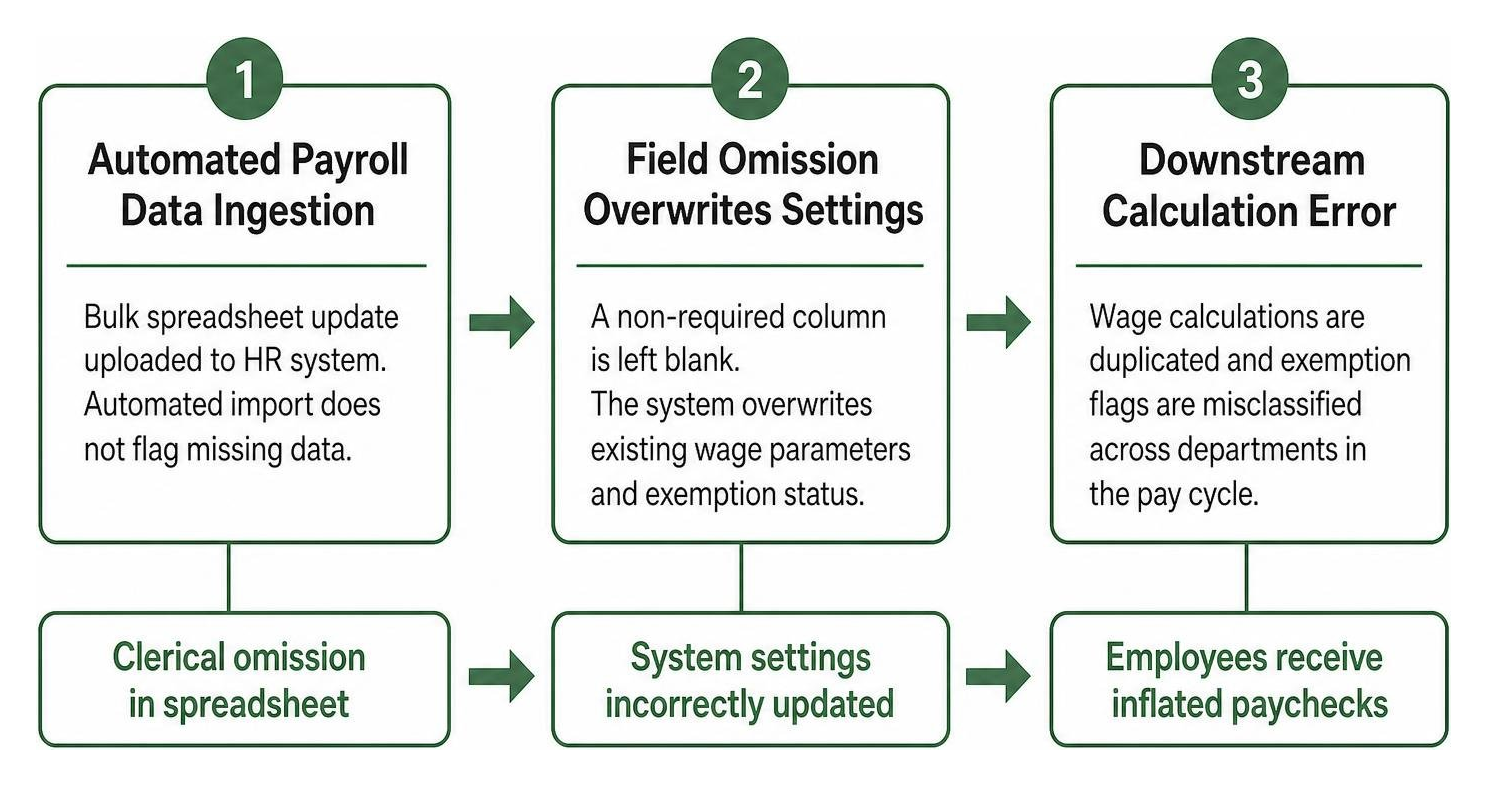
The discrepancy stemmed from a single blank data field within a bulk spreadsheet update. The upload inadvertently altered wage parameters and misclassified staff exemption statuses. As documented in the City of Austin payroll overpayment report, the city initiated a clawback process to recover the funds. This required workers to sign repayment agreements under compressed deadlines, underscoring the delicate balance between public fiscal accountability and worker protections.
Data Omission Mechanics in Municipal HR Systems
Large public entities and affiliated organizations rely on enterprise platforms like Workday and Gusto to manage complex pay structures. Municipal compensation rules—such as those detailed in the Austin Economic Development Corporation personnel guidelines—strictly define standard hours, overtime thresholds, and exempt versus non-exempt classifications.
When routine job description updates were performed, a non-required data column was left empty. When the spreadsheet was imported, the automated HR system did not flag the missing data. Instead, it overrode existing baseline settings. This caused the system to duplicate wage calculations and alter exemption flags for hundreds of staff members. The automation multiplied the initial clerical omission across multiple departments within a single pay cycle.
Distinguishing Wage Overpayments from Federal Employee Credits
The administrative term “payroll recovery” often gets confused with statutory federal tax credits. A wage overpayment is an operational accounting error that creates an unearned financial surplus on an employee’s paycheck. This must be repaid to the employer to balance the general ledger.
In contrast, federal relief programs—such as the statutory guidelines on the Employee Retention Credit—involve legitimate tax refunds claimable by eligible employers, not individual municipal workers. Business owners adjust their federal employment filings using Form 941-X to claim credits against qualified wages paid during qualifying disruptions.
| Characteristic | Municipal Wage Overpayment | Federal Employee Retention Credit (ERC) |
|---|---|---|
| Recipient of Funds | Individual W-2 Employee | Eligible Employer / Business Entity |
| Originating Agency | City Payroll / Finance Department | Internal Revenue Service (IRS) |
| Nature of Transaction | Unintended clerical excess | Statutory payroll tax refund |
| Primary Resolution | Repayment via deduction or check | Form 941-X reconciliation or funding advance |
| Tax Impact | Corrected via Form W-2c | Adjusted gross income / corporate tax returns |
For Austin employees and employers alike, resolving an Austin employee credit refund or wage discrepancy requires a clear understanding of whether the adjustment is an internal payroll correction or a federal tax credit claim. Municipal workers must follow the city’s repayment framework, while private businesses in Travis County may need to reconcile payroll ledgers before pursuing statutory credits.
Resolving Your Austin Employee Credit Refund and Payroll Discrepancies
Navigating payroll adjustments requires clear documentation. Whether rectifying internal wage balances or managing broader organizational cash flow, employers and workers must understand their accounting trail. For private enterprises in Travis County, keeping compensation ledgers accurate is essential when preparing corporate tax filings. Resources like The Texas Business Guide to ERC Refunds and Cash Flow outline how sound payroll practices preserve working capital.

Identifying an Austin Employee Credit Refund Versus Tax Adjustments
When municipal staff examine their pay stubs following a wage reconciliation, they encounter net pay deductions, adjusted taxable gross figures, and subsequent year-end tax adjustments. The city must issue Form W-2c (Corrected Wage and Tax Statement) to adjust social security, Medicare, and income tax withholdings so employees do not pay taxes on wages they had to return. By contrast, an Austin employee credit refund applies to businesses claiming a federal tax credit, not to individual workers repaying overpaid wages.
For business owners reviewing their quarterly compensation sheets, distinguishing internal wage corrections from federal credits is essential. A business exploring liquidity options can benefit from understanding what ERC funding is, particularly when balancing operating budgets while waiting on outstanding tax claims with the IRS.
Step-by-Step Repayment Options and Legal Considerations
When the City of Austin identified its $1.4 million error, it presented affected personnel with formal repayment frameworks:
- Standard Payroll Deductions: Employees could distribute the clawback amount across one to four consecutive pay periods.
- Direct Check Remittance: For balances exceeding $5,000, workers had the option to remit payment via certified funds to avoid severe reductions to their bi-weekly take-home pay.
- Formal Repayment Agreements: Staff were required to sign binding contracts acknowledging the debt and setting clear recovery terms.
- Union and Administrative Advocacy: Labor representatives, including AFSCME, stepped in to ensure that recovery timelines did not cause undue financial hardship or infringe on collective bargaining rights.
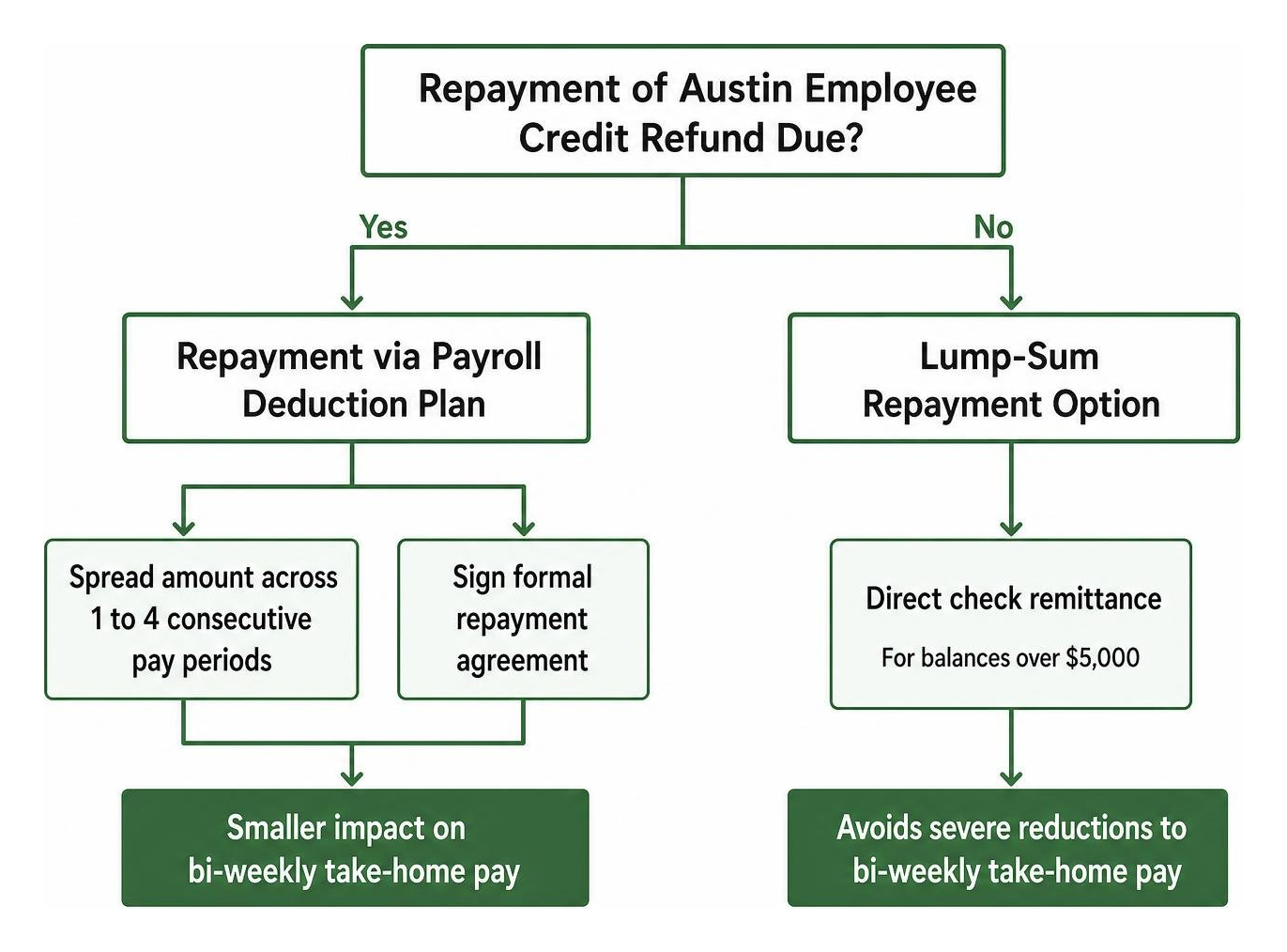
For affected employees, the repayment schedule directly influences take-home pay and tax withholding accuracy. Choosing between payroll deductions and lump-sum remittance depends on individual cash flow needs, the total overpayment amount, and whether the correction spans multiple tax years. Employers must document every recovery action to support accurate Form W-2c issuance and avoid disputes over adjusted taxable wages.
How Austin Employers and Organizations Can Fix Payroll Tax Delays
For private employers in Austin and Travis County, maintaining liquidity while navigating complex payroll tax rules requires practical planning. Delays in processing federal refunds often tie up capital that could otherwise support hiring, operations, or local expansion. When cash flow is stalled by government processing queues, business owners often explore strategies on How to Turn Your Austin ERC Refund into Cash Today to access their locked equity.

Navigating Austin Employee Credit Refund Processing and Repayment Deadlines
Delays at federal processing centers require careful claim preparation. When managing substantial tax credit filings, companies must ensure their underlying payroll ledgers, quarterly 941 forms, and gross wage calculations are fully audited.
If long government turnaround times create cash flow constraints, learning how an ERC claim purchase works can provide Austin business leaders with an alternative path to stabilize working capital without waiting on extended processing windows.
Best Practices for Enterprise Payroll Auditing and Controls
To protect against spreadsheet errors, bulk data overrides, and costly clawback disputes, organizations should establish structured internal controls:
- Enforce Mandatory Data Validation: Configure HRIS platforms (such as Workday or Gusto) to reject bulk data imports that contain empty fields in critical calculation columns.
- Run Dual-Verification Pre-Upload Audits: Require secondary administrative sign-off on any spreadsheet modifying employee compensation or exemption status.
- Conduct Parallel Payroll Simulations: Test major organizational updates in a sandbox environment before running live payroll.
- Maintain Transparent Workforce Communication: If an error occurs, provide affected staff with itemized calculations and practical repayment timelines before issuing recovery notices.
These controls help prevent the kind of systemic overpayment that triggered the City of Austin’s $1.4 million clawback. For private employers, the same discipline supports accurate payroll tax filings and reduces the risk of IRS audit complications when claiming federal credits. A clean payroll ledger is the foundation for both internal wage corrections and any Austin employee credit refund claim processed through federal channels.
Frequently Asked Questions About Austin Payroll Errors and Credits
What caused the recent City of Austin payroll overpayment error?
The overpayment was caused by an unpopulated, non-required field in a job-description spreadsheet. When uploaded to the city’s Workday HR system, the blank entry overrode existing employee profiles, causing the software to calculate double wages and misclassify exemption statuses for 675 workers.
How do municipal payroll corrections affect employee tax filings?
When an employer recovers overpaid wages within the same tax year, they adjust subsequent payroll records directly. If recovery spans multiple calendar years, the employer must issue Form W-2c. This adjusts the worker’s reported taxable earnings and payroll tax withholdings, preventing them from being taxed on returned income.
What options exist if an overpayment deduction creates financial hardship?
Employees facing financial difficulties can request extended repayment terms from HR or consult union representatives to negotiate manageable deduction schedules. In certain situations, staff can opt for lump-sum check installments to prevent substantial reductions to their regular bi-weekly paychecks.
How does an Austin employee credit refund differ from a wage overpayment correction?
An Austin employee credit refund typically refers to a federal tax credit claimed by an eligible employer, such as the Employee Retention Credit, rather than a direct payment to an individual worker. A wage overpayment correction, by contrast, is an internal payroll adjustment where an employee repays excess wages received due to a clerical error. The two processes involve different forms, timelines, and responsible parties.
Conclusion
Maintaining payroll integrity is critical for both public institutions and private enterprises across Travis County. While the City of Austin works through internal control upgrades and overpayment recoveries, commercial business owners face their own balance-sheet challenges when navigating federal tax credit queues.
At SFG Capital, we help Austin businesses secure working capital by expediting and monetizing qualified tax claims. Discover our specialized funding services for accelerated business claims to resolve cash-flow bottlenecks and keep your operations moving forward.
See what your business may qualify for.
60 seconds. No documents. No upfront cost.
General information only, not legal or tax advice. Eligibility and estimates are fact-specific and subject to review.