
Blog / Insights
InsightsThe Mystery of the Missing Tax Topic and Other Refund Delays
October 14, 2026 · 9 min read · By the SFG Capital team
Why Your Refund Is Still Being Processed
If your refund is still being processed, the IRS received your return but has not finished reviewing it or assigned a payment date. For most standard e-filed returns, the wait is under 21 days. Paper returns often take 6 to 8 weeks. Check Where’s My Refund? once daily, watch your mail for an IRS notice, and contact the IRS only after 21 days for e-filed returns or six weeks for paper returns – unless the agency asks you to act sooner.
A longer delay can mean the IRS needs to verify information, correct an error, review a credit, or apply a refund offset for eligible past-due debts. Returns claiming the Earned Income Tax Credit or Additional Child Tax Credit also face a legal hold until at least February 15 under the PATH Act. For businesses awaiting an ERC-related refund, the timeline can be much longer and may require more documentation and review.
I am Santino Battaglieri, founder of SFG Capital. With more than nine years in financial services and experience funding and purchasing over $500 million in ERC claims, I have seen how a refund still being processed can put real pressure on business cash flow – and why careful records and compliant claims matter.
Learn more about refund still being processed:
- average time for irs to approve refund
- how come my federal refund is taking so long
- irs time to process tax return
Decoding the Status: Why Your Refund Still Being Processed
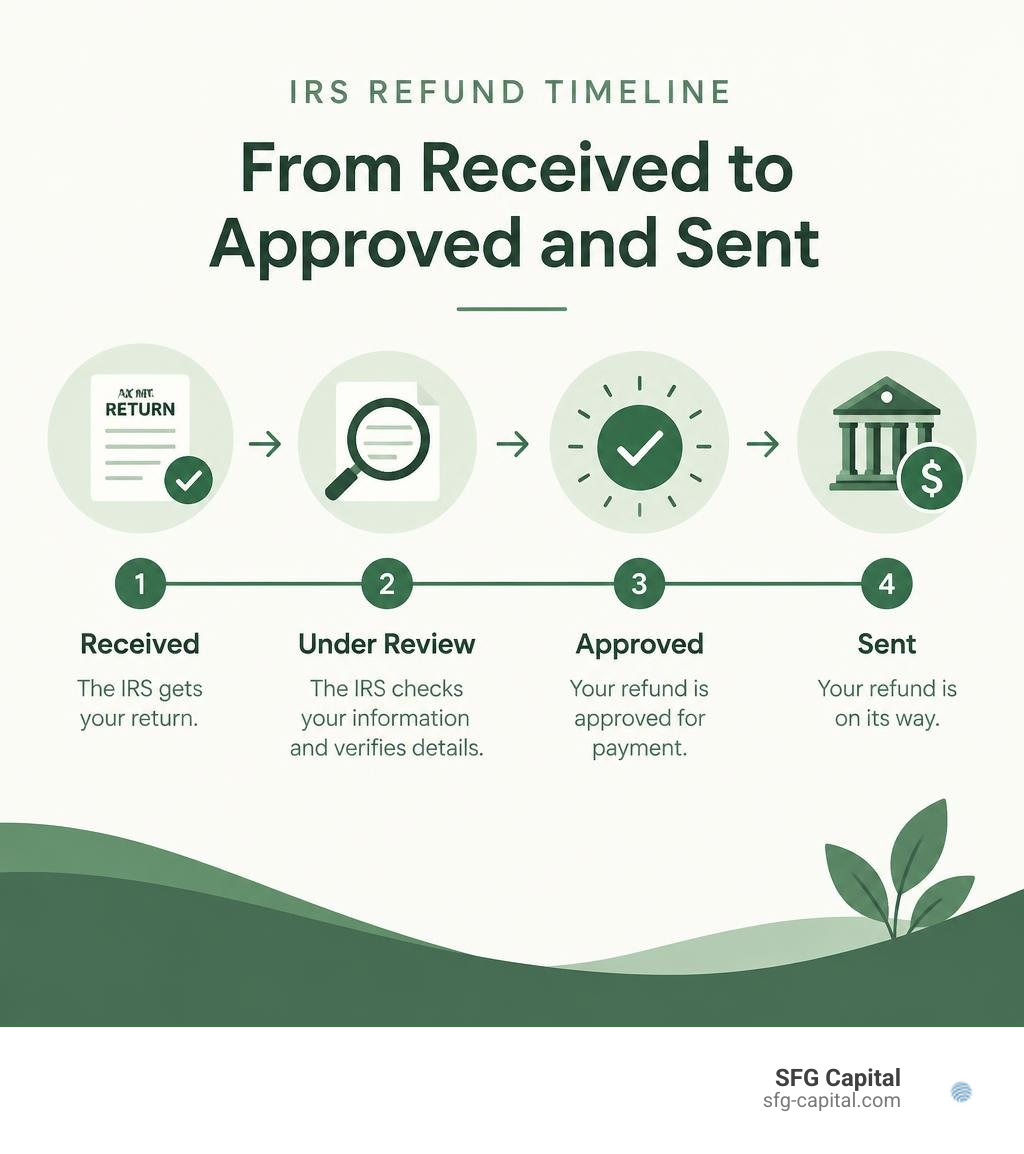
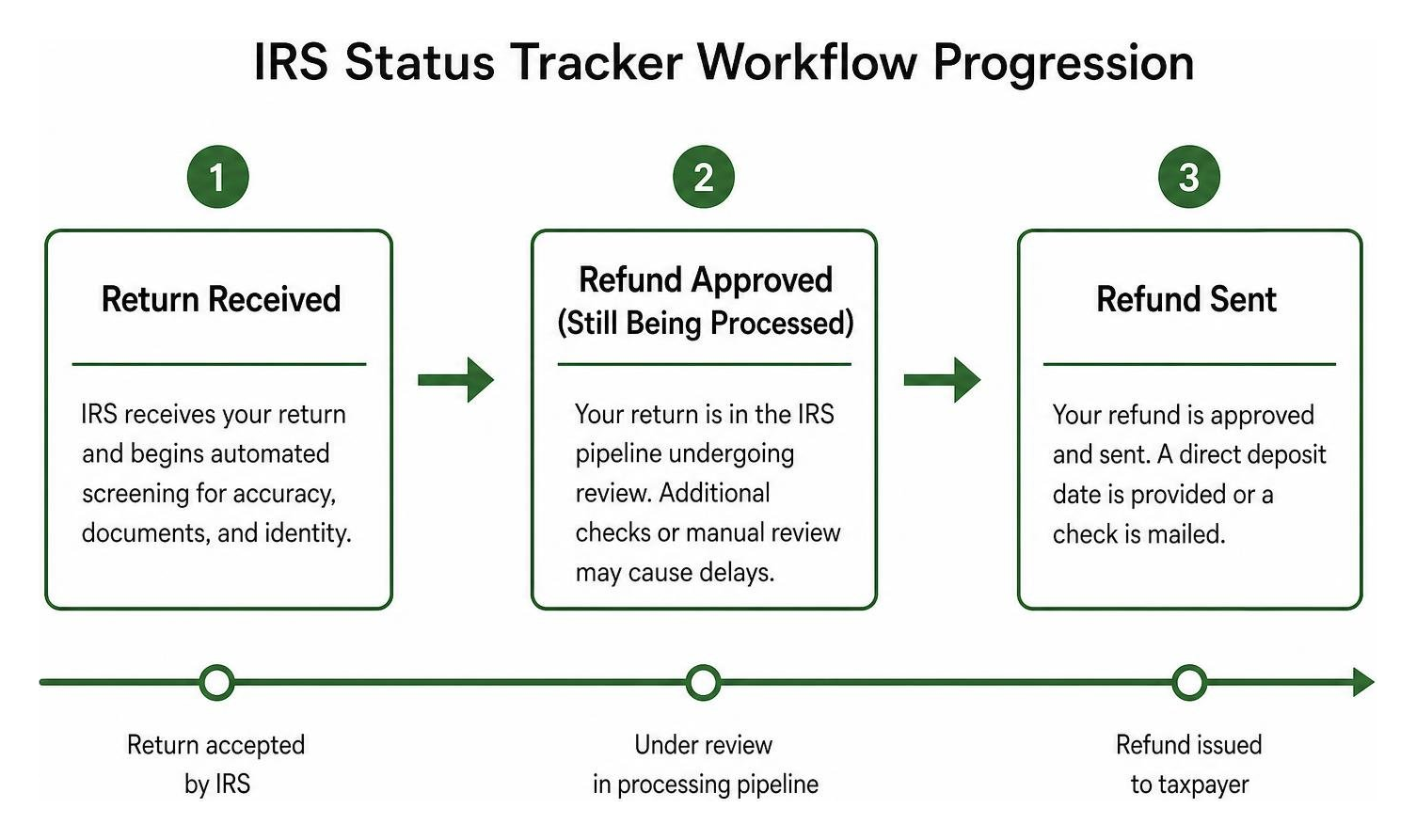
When checking the status of a filed tax return, the IRS online tracking tools provide brief updates that can sometimes feel vague. The “Where’s My Refund?” tool and the IRS2Go mobile app guide taxpayers through three primary stages: Return Received, Refund Approved, and Refund Sent.

Once a return is received, automated screening algorithms immediately scan the submission for matching wage documents, mathematical consistency, and identity integrity. If the system clears every filter without human intervention, processing moves seamlessly toward approval. However, when an account gets held up in the pipeline, the status message changes, often leaving taxpayers uncertain about whether their return is delayed or simply undergoing standard verification. In situations involving held or stopped refunds, the system flags the file for internal inspection, suspending the issuance of a direct deposit date until all checks are complete.
What It Means When Your Refund Still Being Processed Status Appears
When the IRS portal displays the message that your return is being processed, it signifies that your submission is officially within the IRS processing pipeline, but the automated review has been suspended or routed to a manual review queue.
Under normal operational conditions, approximately 90% of taxpayers receive their refunds in less than 21 days following electronic acceptance. When a return is routed for additional manual review, that standard timeline no longer applies. In such instances, the reference to specific informational guides—such as Tax Topic 152—may disappear from your tracker screen.
The IRS updates the “Where’s My Refund?” portal once per day, typically overnight between midnight and 6:00 AM. Refreshing the application multiple times throughout the day will not yield new information. Knowing the standard average time for IRS to approve refund requests helps manage expectations during this waiting period.
“Being Processed” vs. “Still Being Processed”
Many taxpayers wonder whether there is an actual technical difference between the wording “Being Processed” and “Still Being Processed.” While the IRS does not publish a formal glossary distinguishing every phrasing variation, experienced tax professionals recognize the operational shifts behind them:
- “Being Processed”: Indicates your return is progressing through standard automated workflows, batch processing algorithms, and preliminary security filters without active holds.
- “Still Being Processed”: Frequently appears when the return has exceeded the standard 21-day timeline or has been diverted by the Error Resolution System (ERS) for human inspection, document reconciliation, or identity verification.
This phrasing shift does not mean your return has been rejected. It indicates that the IRS automated system encountered an item requiring closer examination before funds can be released.
Primary Culprits Behind IRS Tax Refund Delays
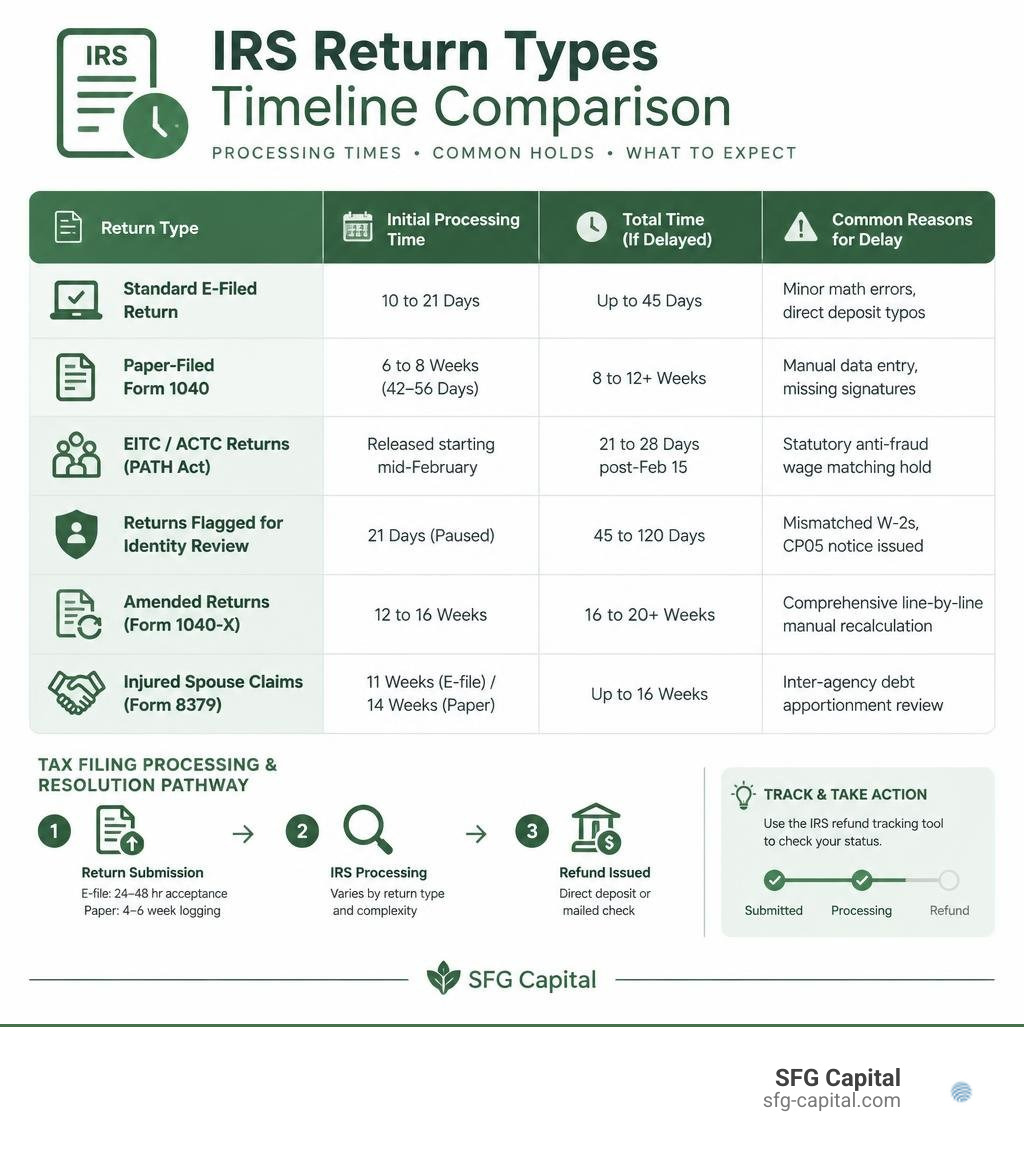
Understanding why an individual or business tax return stalls requires examining the IRS fraud detection and validation mechanisms. While simple clerical errors cause many delays, statutory holds and comprehensive identity integrity programs also play major roles. Reviewing the 7 common culprits for slow federal refunds reveals that most issues fall into specific administrative categories.
| Return Type / Issue | Standard Processing Window | Potential Delay Timeline | Primary Trigger |
|---|---|---|---|
| Standard E-Filed Return | 10 to 21 Days | Up to 45 Days | Minor math errors, direct deposit typos |
| Paper-Filed Form 1040 | 6 to 8 Weeks (42–56 Days) | 8 to 12+ Weeks | Manual data entry, missing signatures |
| EITC / ACTC Returns (PATH Act) | Released starting mid-February | 21 to 28 Days post-Feb 15 | Statutory anti-fraud wage matching hold |
| Returns Flagged for Identity Review | 21 Days (Paused) | 45 to 120 Days | Mismatched W-2s, CP05 notice issued |
| Amended Returns (Form 1040-X) | 12 to 16 Weeks | 16 to 20+ Weeks | Comprehensive line-by-line manual recalculation |
| Injured Spouse Claims (Form 8379) | 11 Weeks (E-file) / 14 Weeks (Paper) | Up to 16 Weeks | Inter-agency debt apportionment review |
The PATH Act and Refund Holds for EITC and ACTC
Under the Protecting Americans from Tax Hikes (PATH) Act, the IRS is legally prohibited from issuing refunds on returns claiming the Earned Income Tax Credit (EITC) or the Additional Child Tax Credit (ACTC) before mid-February.
This statutory buffer allows the IRS time to cross-reference employer-submitted W-2 and 1099 forms against the wage numbers reported on individual returns, preventing improper payments. Even if you submit an e-filed return during the third week of January, the IRS will hold your refund until at least February 15. The “Where’s My Refund?” tool often displays a generic processing message during this period until the hold lifts and updates begin populating.
Treasury Offsets and Refund Reductions
A tax refund may also be delayed or adjusted if it is subject to the Treasury Offset Program (TOP), which is administered by the Bureau of the Fiscal Service (BFS). Under federal law, the government can divert part or all of an individual’s tax refund to satisfy specific outstanding debts, including:
- Delinquent federal income taxes from prior years
- Past-due state income tax obligations
- Unpaid child support or spousal support orders
- Non-tax federal debts, such as defaulted federal student loans
When an offset occurs, the IRS releases the remaining balance (if any) as a standard refund while the BFS mails a formal explanatory letter (such as Notice CP32 or an equivalent offset notice) outlining the debt, the agency that received the funds, and the remaining balance.
Processing Timelines and When to Contact the IRS
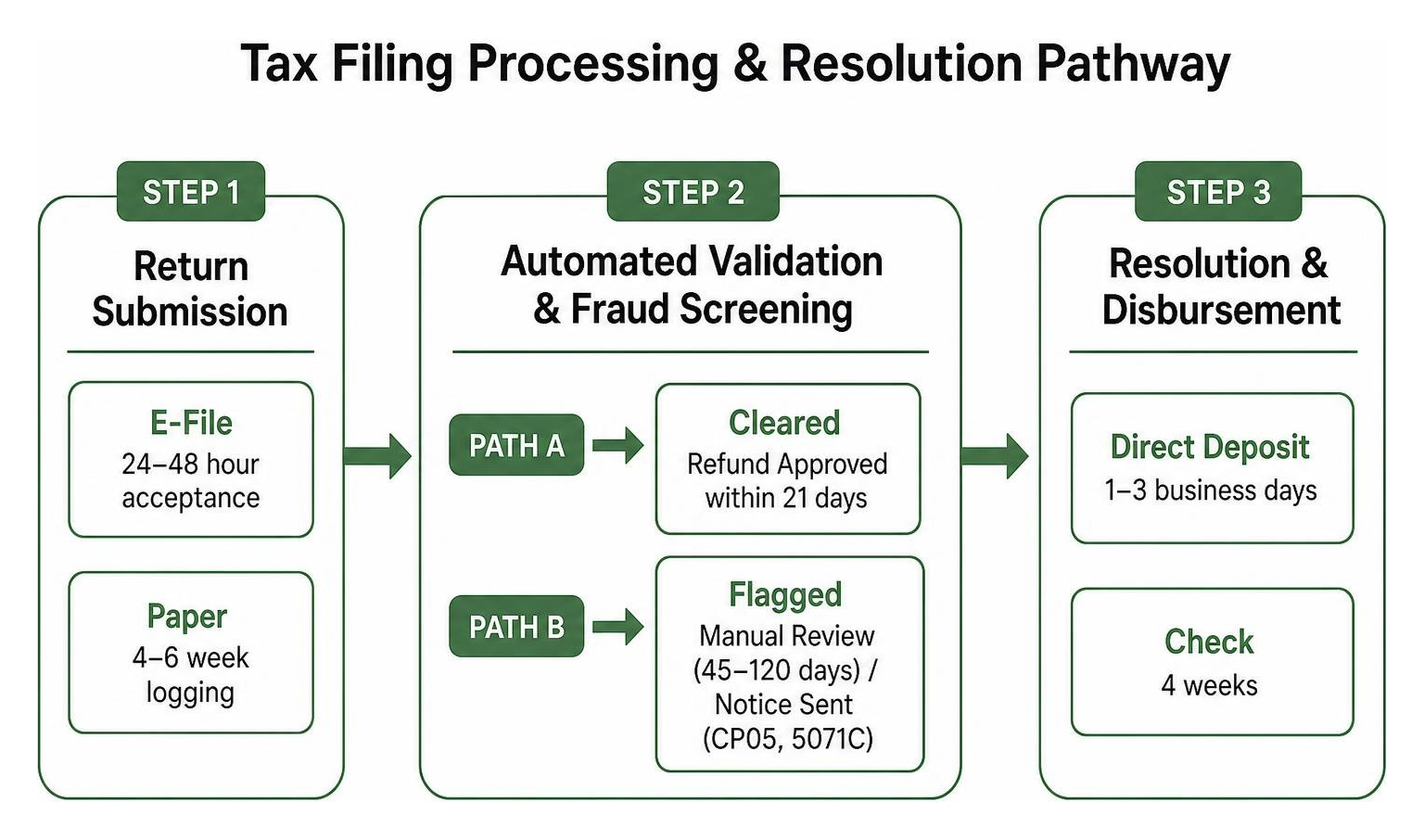
Processing timelines depend heavily on the filing method and whether complex tax credits are involved. Electronic filing paired with direct deposit remains the most efficient route. Paper filings face longer turnaround times because every digit must be manually input or scanned by processing center staff.
Taxpayers can track updates directly using the official IRS refund tracking tool. If your filing exceeds the standard timeframes without an updated approval date or mailed notice, direct communication with the agency may be warranted.
Actionable Steps When Your Processing Exceeds 21 Days
If your e-filed return has exceeded the standard 21-day timeline or your paper return has passed the 6-week mark, take these practical steps to identify and resolve the issue:
- Confirm Acceptance vs. Submission: Check your tax software or tax preparer records to ensure the return was formally accepted by the IRS, not merely transmitted or submitted.
- Inspect Your Mail: Watch for formal IRS communications, such as Notice CP05 (return under review) or Letter 5071C (requesting identity verification). Follow all instructions provided in the notice.
- Check Your Tax Account Transcript: Log in to your personal account on IRS.gov and pull your Account Transcript. Look for transaction codes such as Code 570 (additional liability pending / hold on processing) or Code 971 (notice issued), which explain why a file is paused.
- Initiate an Official Trace (Form 3911): If the tracker indicates a direct deposit was sent or a check was mailed but funds never appeared, submit Form 3911 (Taxpayer Statement Regarding Refund) to begin an official trace.
- Engage the Taxpayer Advocate Service (TAS): If the delay creates severe financial hardship or exceeds 120 days without clear explanation, you can request support from TAS, an independent organization within the IRS.
When encountering prolonged delays, knowing what to do when your tax refund is stuck in processing limbo helps keep your tax resolution efforts structured and productive.
Refund Approved vs. Refund Sent: Understanding the Final Step
Taxpayers often mistake refund approval for actual deposit delivery. Understanding the distinction between these statuses helps prevent unnecessary concern:
- Refund Approved: The IRS has completed all audits, reviews, wage matching, and mathematical checks. A specific refund issuance date has been scheduled in the payment master file.
- Refund Sent: The IRS has initiated the direct deposit transfer to the Federal Reserve Bank for delivery to your financial institution, or printed and mailed a physical check.
Once a direct deposit status updates to “Sent,” commercial banks generally require 1 to 3 business days to process and post the automated clearing house (ACH) transfer to your account.
For taxpayers receiving paper checks, delivery depends on standard postal timelines. If a physical check is lost, destroyed, or stolen, the IRS can cancel the original draft and re-issue a replacement check within 4 weeks of receiving a completed Form 3911 trace request.
Frequently Asked Questions About Delayed Refunds
Why did the Tax Topic disappear from my IRS refund status?
When the reference to Tax Topic 152 disappears from the IRS tracker, it usually means the return has moved out of the standard automated processing cycle and into a manual review queue or error resolution stage. This often occurs during automated account recalculations, document verification steps, or identity verification holds. It does not automatically indicate an audit; the topic reference frequently reappears once the review is finished.
Can the IRS reduce my refund without warning while it is processing?
Yes. The IRS and the Bureau of the Fiscal Service have the legal authority to adjust a refund during processing. This occurs if mathematical errors are corrected on your return or if an outstanding liability is identified through the Treasury Offset Program (TOP). The agency will disburse the remaining balance (if any) and mail a formal explanatory notice detailing the adjustments made.
How long does the IRS take to re-issue a lost or stolen refund check?
Once you notify the IRS that a issued check was never received, the agency initiates a payment trace using Form 3911. If the check was never cashed, the IRS typically cancels the original payment and issues a replacement check within 4 weeks. If the trace reveals that the check was improperly cashed, the Bureau of the Fiscal Service opens an inquiry and sends a claim package that must be completed to verify your endorsement signature before a new check can be authorized.
Conclusion
Encountering delays during the tax refund process can be frustrating, but understanding the mechanisms behind automated screenings, statutory holds, and manual reviews helps bring clarity to the situation. Maintaining organized documentation, checking account transcripts, and monitoring official IRS correspondence are the most effective ways to manage your return through to completion.
For business owners in Travis County and the surrounding Austin area, processing delays can involve much more than an individual 1040 return. Commercial entities navigating complex filings—such as the Employee Retention Credit (ERC)—often face significant administrative processing windows that impact cash flow and operational planning.
At SFG Capital, we specialize in helping businesses navigate IRS refund delays through specialized claims analysis, refund advances, and buyout solutions that unlock vital capital without the prolonged wait. If your business is managing delayed tax credits and needs reliable liquidity, explore our comprehensive financial and tax credit services to keep your operations moving forward.
See what your business may qualify for.
60 seconds. No documents. No upfront cost.
General information only, not legal or tax advice. Eligibility and estimates are fact-specific and subject to review.