
Blog / Insights
InsightsApplying for the Employee Retention Credit Made Easy
November 14, 2026 · 9 min read · By the SFG Capital team
Employee Retention Credit Applications: What to Do Now
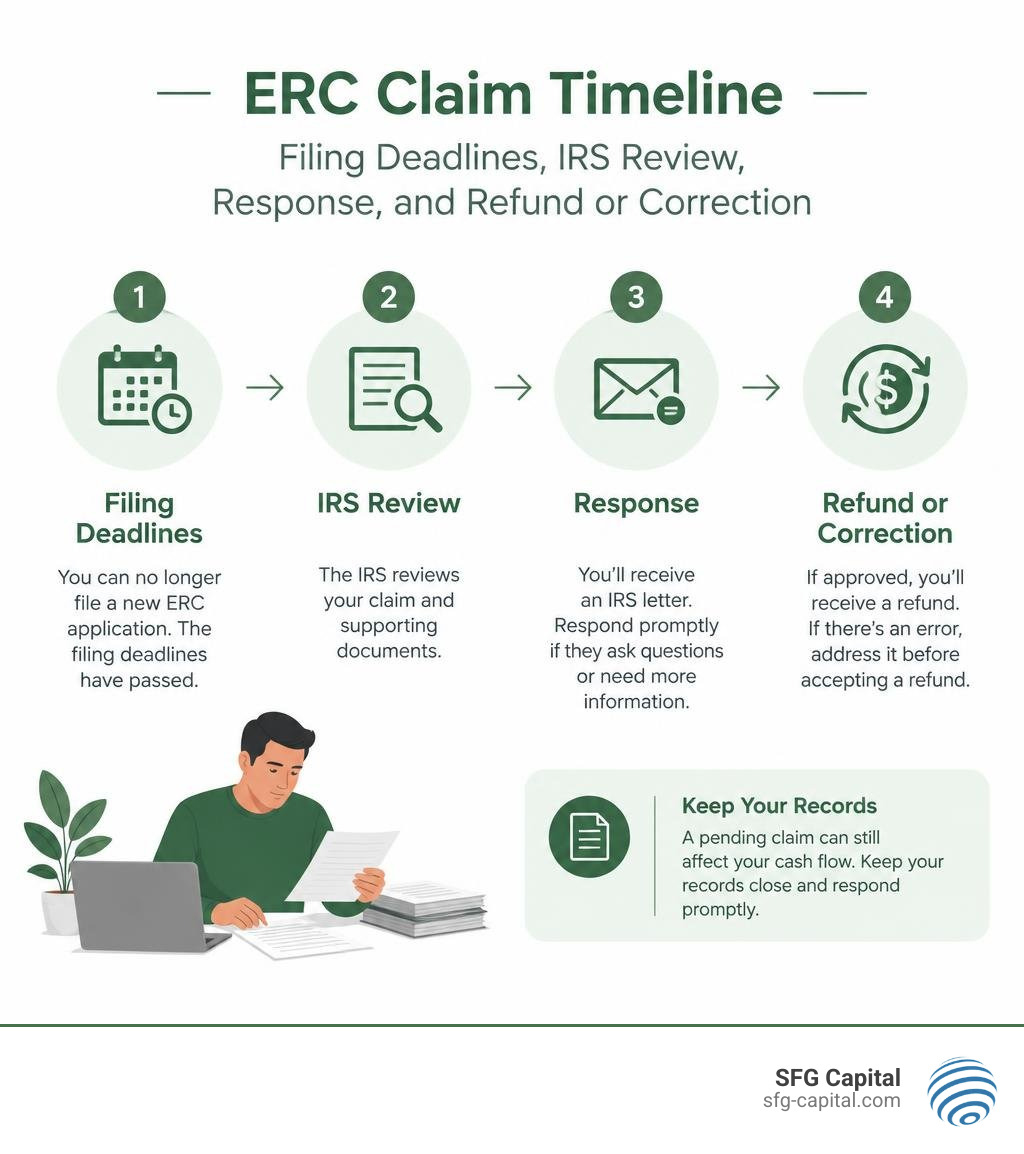
You can no longer file a new employee retention credit application. The filing deadlines have passed. If you filed on time and are still waiting, gather your payroll records, confirm the wages and eligibility behind your claim, and watch for IRS letters. If you find an error, address it before accepting a refund.
A pending claim can still affect your cash flow. Keep your records close and respond promptly if the IRS asks questions or denies the credit.
I’m Santino Battaglieri, founder of SFG Capital. My nine years in financial services include helping businesses review employee retention credit application records and navigate funding for pending claims.
Basic employee retention credit application vocab:
- IRS Form 941 Employee Retention Credit
- Form for Employee Retention Credit
- Employee Retention Credit Qualified Wages 2026
Understanding ERC Eligibility and Calculation Rules
The Employee Retention Credit (ERC) was created under the CARES Act to reward employers who kept workers on their payrolls during the height of pandemic-related disruptions. While designed as a relief measure, the rules governing what qualifies an employer require strict substantiation under official IRS Employee Retention Credit guidance.
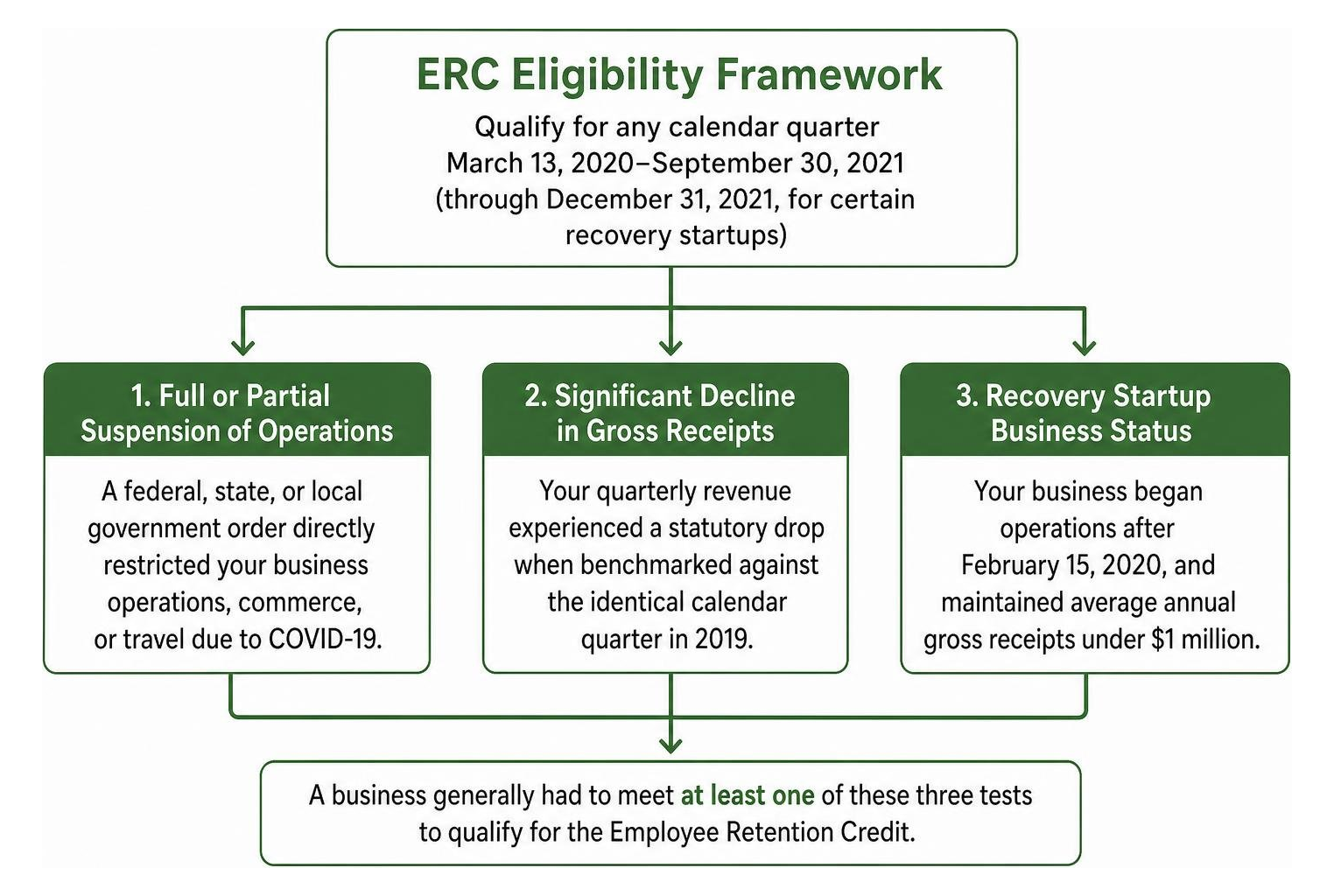
To qualify for any given calendar quarter between March 13, 2020, and September 30, 2021 (or through December 31, 2021, for certain recovery startups), a business generally had to meet at least one of three primary tests:
- Full or Partial Suspension of Operations: A federal, state, or local government order directly restricted your business operations, commerce, or travel due to COVID-19.
- Significant Decline in Gross Receipts: Your quarterly revenue experienced a statutory drop when benchmarked against the identical calendar quarter in 2019.
- Recovery Startup Business Status: Your business began operations after February 15, 2020, and maintained average annual gross receipts under $1 million.
Before defending or evaluating any filed claim, walking through the ERC eligibility checklist helps ensure that every quarter claimed rests on verified payroll records and legitimate qualifying events.
2020 vs. 2021 Credit Rules and Maximums
The statutory framework shifted dramatically between the 2020 and 2021 tax years. The credit expanded its potential payout while lowering the revenue decline hurdle in 2021, creating distinct calculation rules across the claim periods. Across all combined quarters, the theoretical maximum benefit reached up to $26,000 per qualifying employee ($5,000 for 2020 and up to $21,000 across three quarters in 2021).
| Criterion / Rule | 2020 Tax Year | 2021 Tax Year (Q1–Q3) |
|---|---|---|
| Gross Receipts Decline Threshold | Greater than 50% drop vs. 2019 baseline | Greater than 20% drop vs. 2019 baseline |
| Credit Percentage on Qualified Wages | 50% of qualified wages | 70% of qualified wages |
| Wage Cap Per Employee | $10,000 cap for the entire year | $10,000 cap per calendar quarter |
| Maximum Credit Per Employee | $5,000 annually | $7,000 per quarter ($21,000 annual max) |
| Large Employer Headcount Cutoff | More than 100 full-time employees | More than 500 full-time employees |
| Wage Eligibility (Large Employers) | Wages paid to staff not providing services | Wages paid to staff not providing services |
For small employers (100 or fewer full-time staff in 2020, or 500 or fewer in 2021), all qualified wages and allocated group health plan costs paid during an eligible period count toward the credit, regardless of whether employees worked.
Credit Union and Entity Eligibility Nuances
While most private employers and tax-exempt 501(c) organizations qualified for relief, specific legislative quirks affected financial cooperatives. Due to statutory drafting in the original CARES Act, federally chartered credit unions were treated as federal instrumentalities and inadvertently excluded from claiming the ERC for the 2020 tax year.
In contrast, state-chartered credit unions were permitted to claim the credit for both 2020 and 2021, provided they satisfied the standard revenue reduction or operational shutdown standards. Subsequent legislative updates permitted federally chartered credit unions to participate for eligible 2021 quarters, but the 2020 exclusion remained intact.
Step-by-Step Employee Retention Credit Application and Review Process
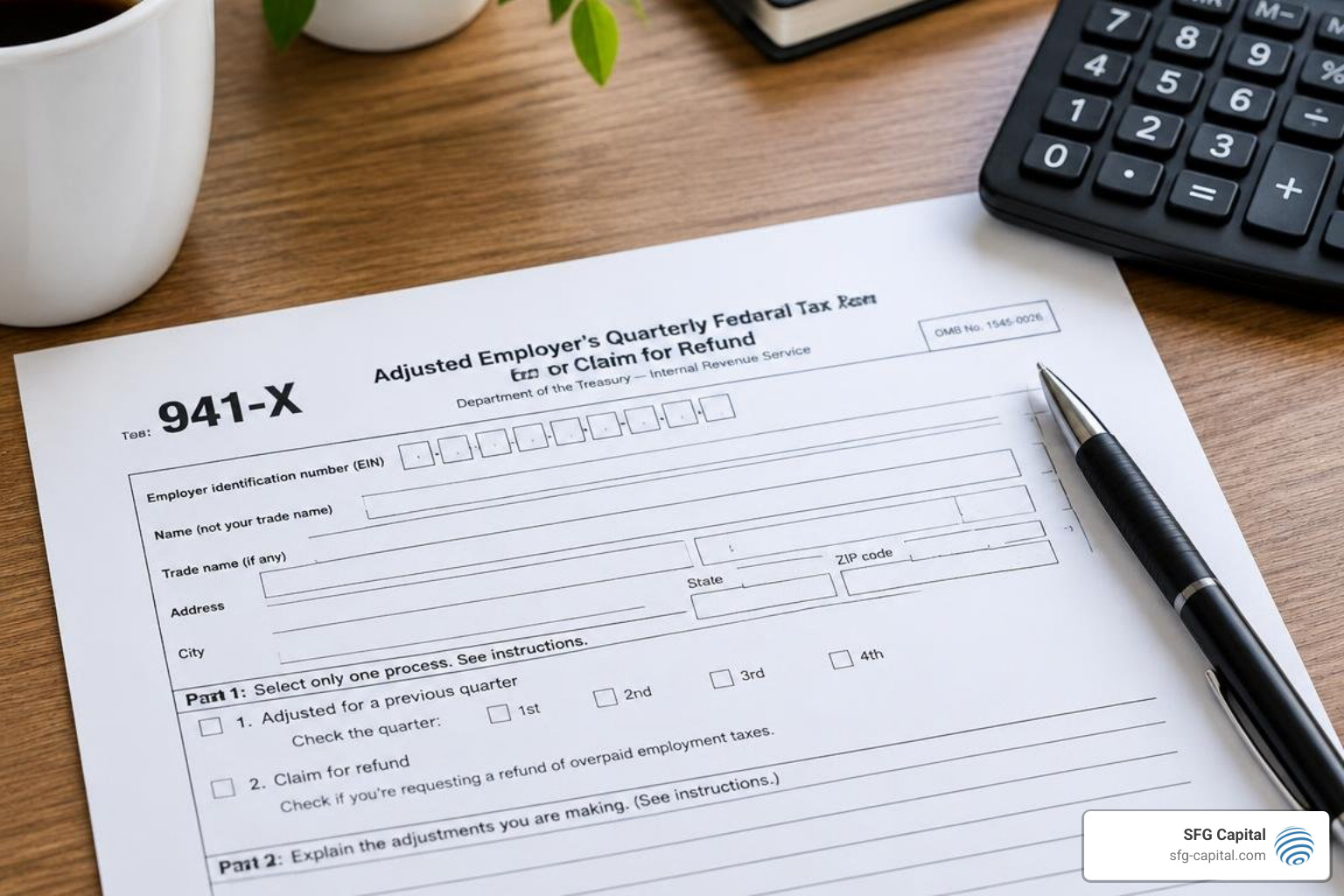
Claiming the credit required employers to file an adjusted quarterly federal payroll return using Form 941-X. Because the credit was originally available as an offset on Form 941 or requested early via Form 7200, retroactively claiming funds required formal adjustments across prior tax periods.
Reviewing a completed filing follows a structured sequence outlined in our step-by-step ERC process:
- Verify Baseline Quarters: Confirm 2019 quarterly revenue figures against business bank records and official tax returns.
- Isolate Eligible Wages: Remove any wages subsidized by Paycheck Protection Program (PPP) loan forgiveness, Restaurant Revitalization Funds, or other targeted tax credits to prevent prohibited double-dipping.
- Calculate Qualified Health Plan Costs: Allocate pro-rata employer health insurance contributions to qualifying employees for eligible periods.
- Audit Form 941-X Reconciliations: Double-check that Nonrefundable and Refundable portions of the credit match the exact lines on the amended return.
Preparing Your Employee Retention Credit Application Documentation
Under current IRS review standards, substantiation is everything. If the IRS reviews your submission, you must be prepared to supply comprehensive contemporaneous documentation.
When decoding ERC refund requirements, organize the following files into an audit-ready package:
- Official government shutdown orders with clear local mandates that forced your business to alter its hours or scope of operations.
- Detailed payroll summaries displaying individual employee wage breakdowns, gross pay, and pre-tax health deductions for each quarter.
- PPP forgiveness calculation sheets showing exactly which payroll periods and wages were applied toward loan forgiveness.
- Controlled group and affiliation worksheets demonstrating that all related entities were aggregated properly to establish accurate full-time employee headcounts.
Income Tax Adjustments and Wage Expense Deductions
Claiming the ERC carries direct consequences for your federal business income tax returns under Internal Revenue Code Section 280C. By law, you cannot take a standard business wage deduction on the exact same payroll dollars that generated an ERC tax refund.
This requirement means you must reduce your deductible wage expenses on your corporate or partnership tax return by the total dollar value of the ERC claimed for that respective tax year. If you claimed an ERC for 2020 or 2021 wages, you were required to file an amended income tax return (such as Form 1120, 1120-S, or 1065) for that specific historical tax year to adjust your deductible expenses, potentially triggering additional income tax liability for that period.
Navigating IRS Moratoriums, Deadlines, and Backlog Status
On September 14, 2023, the IRS announced an immediate processing moratorium on newly submitted ERC claims to combat aggressive marketing schemes and fraudulent filings. In mid-2024, the agency initiated intensified scrutiny, categorizing claims into high-risk, moderate-risk, and low-risk tiers. In August 2024, the agency resumed processing lower-risk filings while issuing mass disallowance notices to thousands of improper submissions.

Current IRS Processing Times and Remaining Claims
Processing times have slowed considerably as the IRS conducts digitized risk scoring and detailed manual compliance audits. As of August 1, 2026, the IRS reported approximately 17,300 ERC claims remaining across several review stages. Ongoing adjudications have continued to resolve the queue; as of the week ending October 3, 2026, the agency held roughly 13,000 remaining claims distributed across various operational buckets:
- Under Active Initial Review: ~750 claims
- Pending Final Payment or Disallowance: ~2,300 claims
- Under Formal Audit Examination: ~3,000 claims
- Awaiting Review of Disallowance Responses: ~5,400 claims
- Pending Before the Independent Office of Appeals: ~1,500 claims
Statutory Deadlines and Retroactive Filing Windows
The window to file any retroactive ERC claim has definitively closed. The statutory filing deadline for all 2020 ERC claims expired on April 15, 2024. For 2021 claims, the standard deadline expired on April 15, 2025.
Furthermore, under the One Big Beautiful Bill Act signed into law on July 4, 2025, legislative adjustments established an accelerated statutory cutoff date of January 31, 2024, for third- and fourth-quarter 2021 claims. As a result, no new amended payroll returns can be submitted to request the credit today.
Managing Pending Claims, Disallowances, and Scam Protections
If your claim remains under review, you must closely monitor your incoming mail for formal IRS correspondence. If the IRS concludes that your business did not qualify, they will issue Letter 105-C (Formal Claim Disallowance).
Receiving a disallowance notice triggers strict procedural deadlines:
- Administrative Appeal: You generally have 30 calendar days from the date on Letter 105-C to submit a formal written protest requesting a review by the IRS Independent Office of Appeals.
- Refund Litigation: You maintain the right to file a tax refund suit in a U.S. District Court or the U.S. Court of Federal Claims within two years from the mailing date of the disallowance letter.
- Statute Extension (Form 907): If you require additional time to negotiate with the agency or compile missing payroll records, you can execute IRS Form 907 with the agency to extend your two-year litigation deadline.
For additional administrative details on formal responses, consult the official IRS Employee Retention Credit FAQs.
Correcting or Withdrawing an Employee Retention Credit Application
If you reviewed your historical filings and realized your promoter took liberties with the rules, the IRS created relief pathways to help employers avoid severe penalties:
- Special Claim Withdrawal Process: If you filed Form 941-X, your claim has not been paid, and you wish to retract the entire amount, you can fax a specially prepared withdrawal request to the IRS. This treats your claim as if it were never filed, avoiding future accuracy-related penalties. You can also utilize this method if you received a refund check but have not yet deposited or cashed it.
- Voluntary Disclosure Program (VDP): For businesses that already cashed their ERC refund checks, the IRS established the Voluntary Disclosure Program under Form 15434 program details. In prior rounds, the VDP enabled employers to remit back 80% to 85% of received funds while retaining the remainder and securing full relief from civil tax fraud penalties and audits.
Identifying Aggressive Promoters and Red Flags
The ERC rollout unfortunately attracted unscrupulous promoters who charged large upfront fees or percentage-based contingency commissions while pushing ineligible businesses into claiming the credit.
Major red flags of improper ERC promoters include:
- Guaranteeing instant qualification over the phone without reviewing detailed general ledgers or payroll journals.
- Asserting that general supply chain issues or broad economic slowdowns automatically qualified your business without proving direct government suspension mandates.
- Refusing to sign Form 941-X as a paid preparer, leaving business owners with sole legal liability.
- Demanding large non-refundable upfront fees or pressuring you into expensive refund anticipation loans.
Frequently Asked Questions About the Employee Retention Credit
Can employers still file a new employee retention credit claim?
No. The legal deadlines to submit an amended employment tax return for the ERC have expired. All statutory windows—including the April 15, 2024, deadline for 2020 claims, the April 15, 2025, deadline for 2021 claims, and the retroactive January 31, 2024, statutory cutoff for late 2021 periods—are now closed.
How do I withdraw an ERC claim if I suspect eligibility errors?
If your claim has not been processed or if you received an uncashed paper check, you can submit an official withdrawal request. You must print a copy of your filed Form 941-X, write “Withdrawn” across the left margin, have an authorized corporate officer sign and date it, and fax it directly to the designated IRS ERC withdrawal processing unit.
What steps should I take if the IRS disallows my ERC claim?
If you receive Letter 105-C, review the stated reasons for denial with a qualified CPA or tax attorney immediately. You have 30 days to file an administrative appeal with the IRS Independent Office of Appeals, or up to two years to file a refund suit in federal court. If you need more time to assemble documents, you can request an extension using IRS Form 907.
Conclusion
Managing an outstanding Employee Retention Credit claim requires persistent documentation, continuous tracking of IRS correspondence, and strict adherence to federal deadlines. While new claims are no longer permitted, resolving your pending submission accurately is essential for protecting your business against unexpected tax penalties and audit liabilities.
For business owners in Austin and throughout Travis County who are dealing with prolonged IRS processing delays, waiting on essential capital can strain operational growth. At SFG Capital, we help local business owners bypass federal backlogs through specialized claim advances and buyouts backed by transparent, performance-based pricing. If you want to access your tied-up capital and resolve your tax credit uncertainties, explore tailored business funding and tax services with our team today.
See what your business may qualify for.
60 seconds. No documents. No upfront cost.
General information only, not legal or tax advice. Eligibility and estimates are fact-specific and subject to review.