
Blog / Insights
InsightsThe 21 Day Itch: What to Do When Your Refund Is MIA
October 27, 2026 · 9 min read · By the SFG Capital team
It’s Been 21 Days Since I Filed My Taxes. What Should I Do?
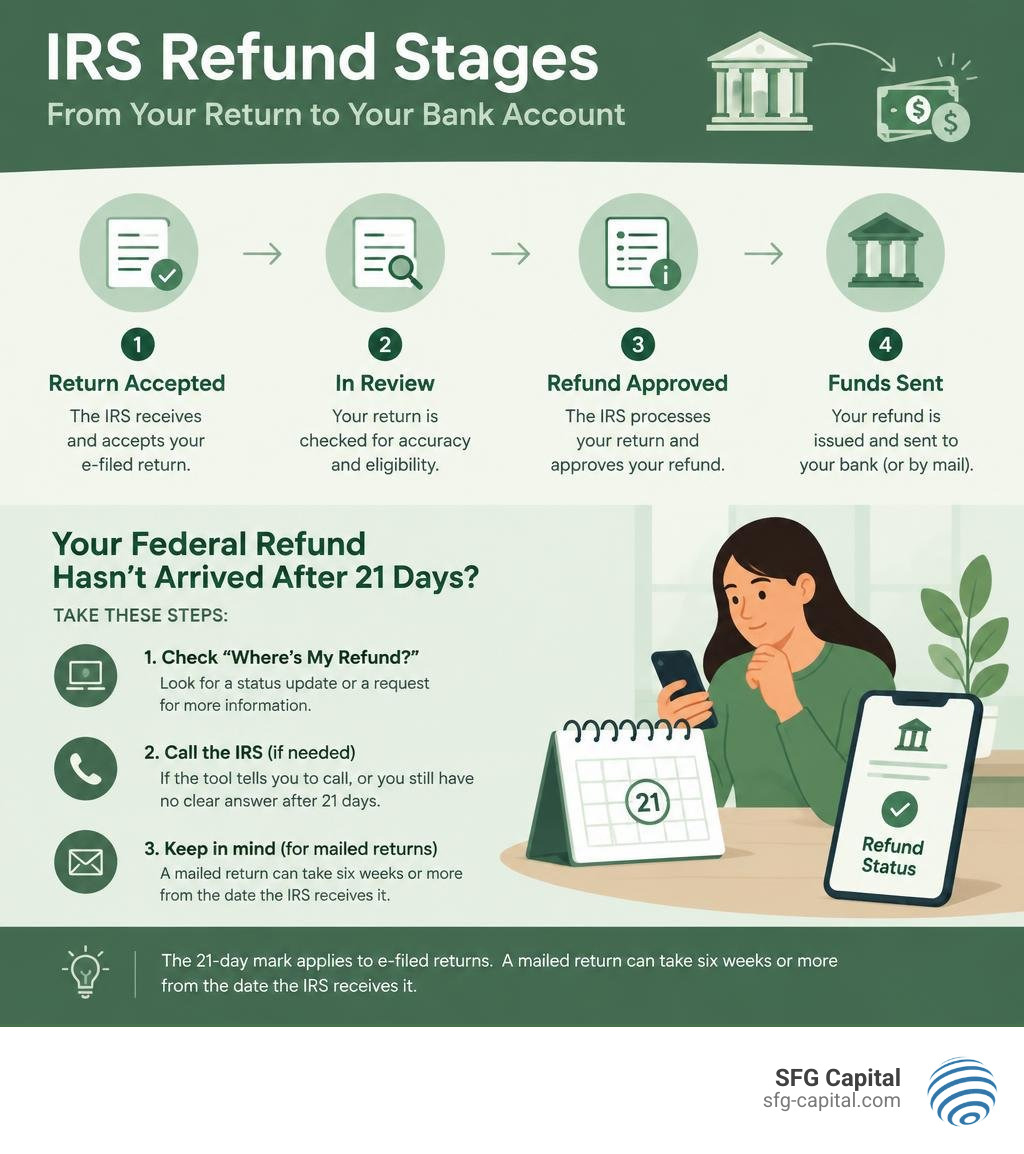
If the IRS accepted your e-filed return 21 days ago and your federal refund has not arrived, check Where’s My Refund? first. Look for a status update or a request for more information. If the tool tells you to call, or you still have no clear answer after 21 days, contact the IRS. A mailed return can take six weeks or more from the date the IRS receives it, so the 21-day mark may not apply.
I’m Santino Battaglieri, founder of SFG Capital, with over nine years in financial services and experience helping businesses manage tax-claim funding and IRS delays. If you’re asking, “it’s been 21 days since i filed my taxes,” this guide starts with the steps for a personal federal refund; business ERC claims follow different rules.
Essential it’s been 21 days since i filed my taxes terms:
- how long after filing taxes do you get your refund
- average time for irs to approve refund
- irs time to process tax return
How to Check Your IRS Refund Status and Understand Processing Stages
When you hit the three-week mark without your deposit, you don’t need to guess where your money is. Instead of letting anxiety take over, you can check your refund status using the IRS digital tracking tools.
The IRS provides two primary portals: the “Where’s My Refund?” web tool and the official IRS2Go mobile app. Both systems connect directly to the IRS master file. To access your data, you must provide three pieces of information:
- Your Social Security Number (SSN) or Individual Taxpayer Identification Number (ITIN)
- Your filing status (Single, Married Filing Jointly, Head of Household, etc.)
- The exact whole-dollar refund amount shown on your Form 1040
The IRS system updates its database only once per day, usually overnight between midnight and 6:00 AM. Constantly refreshing the portal throughout the afternoon will not change your result.

Step-by-Step Guide to Tracking Your Money Online
To track your payout, follow these simple steps using the official IRS refund tracking guidelines:
- Wait for the initial intake window: For e-filed returns, wait at least 24 hours after submission before checking. For paper returns, wait at least four weeks.
- Access the portal: Open the Where’s My Refund? tool on IRS.gov or open the IRS2Go app.
- Enter your credentials: Input your SSN or ITIN, select your exact filing status from the dropdown menu, and enter the expected dollar amount.
- Review your tracker: Check the status bar to see which of the three processing stages your return is currently in.
- Alternative phone lookup: If you do not have internet access, call the automated refund hotline at 800-829-1954 to check your status via phone.
Decoding Your Status: Received, Approved, and Sent
The IRS portal displays three distinct milestones. Understanding when will my refund be approved helps set realistic expectations for when your money will actually hit your account.

| IRS Tracker Status | What It Actually Means | Expected Delivery Timeline |
|---|---|---|
| Return Received | The IRS has your return and has verified your basic identifying data. Processing is underway. | Typically within 21 days of e-filing if no errors exist. |
| Refund Approved | The IRS finished processing your return, confirmed your math, and authorized your refund. | A personalized direct deposit or check mailing date is provided. |
| Refund Sent | The payment instruction went to your bank or the paper check was mailed. | Direct deposit: 1 to 5 business days for bank clearance. Check: up to several weeks by mail. |
Why It’s Been 21 Days Since I Filed My Taxes and Still No Refund
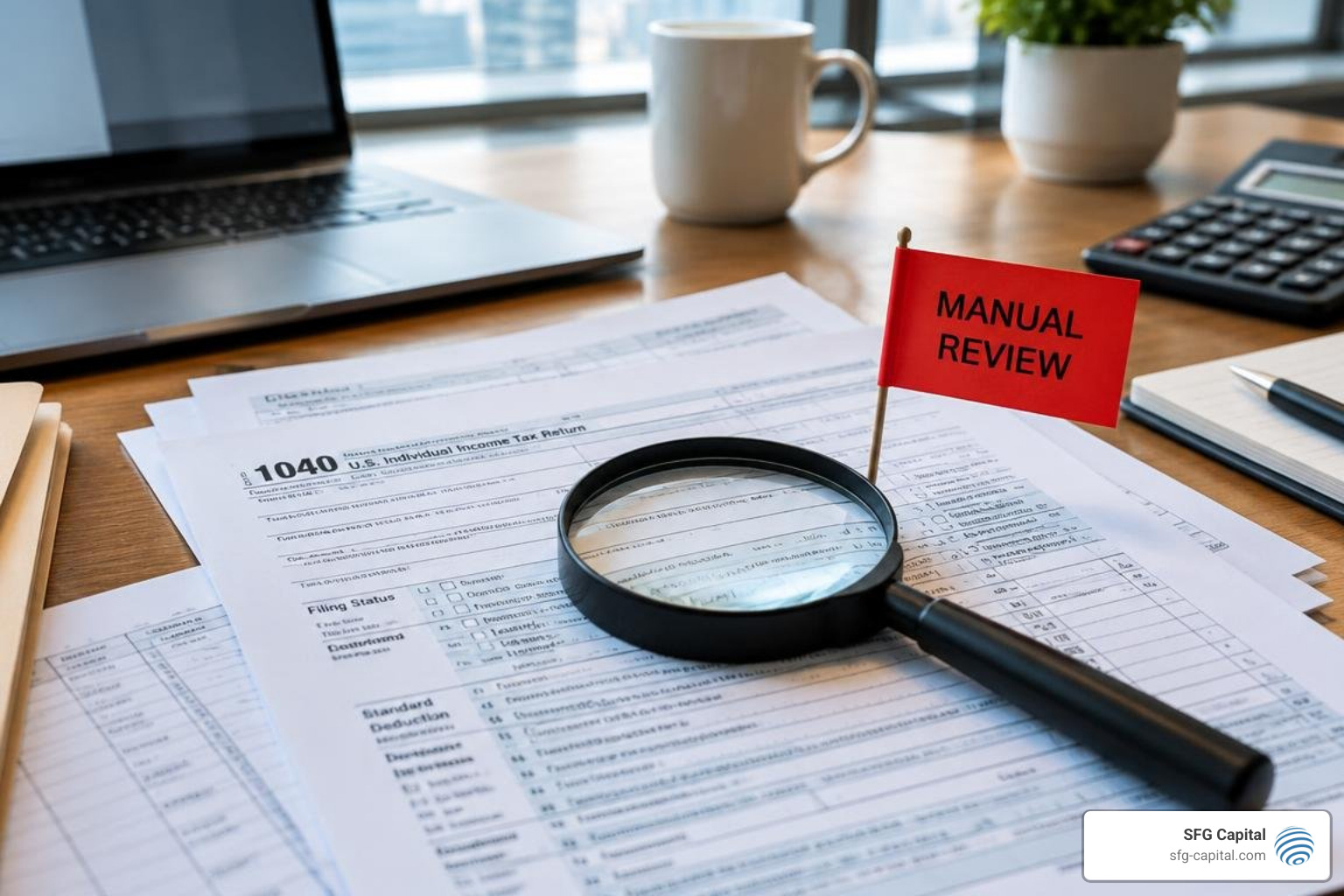
While the IRS issues more than 9 out of 10 refunds in less than 21 days, hitting the 21-day mark without approval usually means your return got pulled from automated processing into a manual review workflow.
Understanding how long after filing taxes do you get your refund requires looking into the common reasons for slow tax refunds that trigger IRS reviews.
Common Filing Errors and Missing Information
Simple clerical mistakes are the leading cause of sudden refund stalls:
- Math errors: Basic calculation discrepancies between your reported income and standard deduction figures.
- Mismatched identification: Misspelled dependent names or mismatched Social Security numbers that do not align with Social Security Administration records.
- Banking typos: Entering incorrect routing or account numbers for direct deposit.
- Incomplete schedules: Omitting required supporting schedules or neglecting to sign a joint return.
Tax Credits, Special Forms, and Identity Verification Delays
Certain tax credits and specialized forms automatically introduce processing holds:
- PATH Act holds: By law, returns claiming the Earned Income Tax Credit (EITC) or Additional Child Tax Credit (ACTC) cannot release refunds before mid-February, regardless of how early you submit.
- Injured Spouse Allocation (Form 8379): Processing this form can extend your timeline up to 14 weeks.
- Amended Returns (Form 1040-X): Adjusting a past return takes between 12 and 16 weeks to process.
- Identity verification: If the IRS flags potential identity theft, you will receive Letter 5071C asking you to verify your identity online or by phone before processing resumes.
Refund Offsets and Less-Than-Expected Payouts
If your refund status shows “Sent” but the amount hitting your bank is lower than expected, your funds may have been redirected through the Treasury Offset Program. Under Bureau of the Fiscal Service direct deposit rules, the government can legally intercept tax refunds to satisfy outstanding delinquent debts, including:
- Past-due child support obligations
- Non-tax federal debts (such as delinquent federal student loans)
- Outstanding state income tax liabilities
- Certain state unemployment compensation debts
If an offset occurs, the Bureau of the Fiscal Service will mail you a formal notice detailing the original refund amount, the offset amount, and the agency that received the funds.
Step-by-Step Action Plan: When and How to Contact the IRS
If it has been at least 21 days since you e-filed (or six weeks since you mailed your paper return), or if the “Where’s My Refund?” tool displays a specific prompt instructing you to call, you should contact the IRS.
When navigating IRS customer service, preparation is essential to avoid long hold times and unresolved calls.
Troubleshooting Next Steps When It’s Been 21 Days Since I Filed My Taxes
When learning what to do when your tax refund is stuck in processing limbo, make sure you have all required paperwork in front of you before dialing 800-829-1040 (for individuals) or 800-829-4933 (for businesses).
Before calling, gather these essential items:
- A complete copy of your current Form 1040 tax return
- The exact refund amount and filing status shown on the return
- Social Security numbers and dates of birth for yourself, your spouse, and any dependents
- Any notices, letters, or correspondence you received from the IRS
- Prior-year tax returns for identity verification questions
If telephone representatives cannot resolve a severe delay causing critical financial hardship, you can request help from the Taxpayer Advocate Service or schedule an in-person appointment at your local IRS Taxpayer Assistance Center.
Ordering Tax Transcripts to Decode IRS Hold Codes
When the “Where’s My Refund?” portal offers vague status updates, ordering an official IRS tax account transcript gives you a deeper look into your processing file. You can download your transcript immediately via your IRS Individual Online Account or request it by mail using Form 4506-T.
Reviewing IRS transcript code definitions helps you understand what is happening behind the scenes:
- Code 150: Your tax return has been officially posted and entered into the master system.
- Code 806: Credit for tax withheld and excess FICA has been verified.
- Code 570: Additional account action pending. A hold has been placed on your refund while the IRS performs further review.
- Code 971: A notice or letter was issued and mailed to your address explaining what the IRS needs from you.
- Code 846: Refund approved and issued. This code indicates your payment has been released.
How to Handle a Lost, Stolen, or Misdirected Refund Check
If the IRS portal states that your refund was sent as a paper check or direct deposit, but you have not received it after 30 days, you can initiate a formal refund trace:
- Complete and submit Form 3911 (Taxpayer Statement Regarding Refund).
- If filing jointly, both spouses must sign the form.
- The IRS will open a trace with the Bureau of the Fiscal Service.
- For direct deposits, the Treasury will contact your banking institution to verify where the funds landed.
- For lost or stolen paper checks, the Bureau will verify whether the check was cashed. If uncashed, they cancel it and issue a replacement. If forged, they provide a claim package to start reimbursement.
Managing Cash Flow and Speeding Up Future Tax Returns
Waiting on an overdue refund can disrupt personal budgets and business operations. Implementing practical cash management strategies helps bridge the gap while your claim is under review.
Financial Strategies While Waiting for Your Delayed Payout
If your refund is delayed, consider these steps to protect your personal finances:
- Establish a lean budget: Temporarily pause non-essential discretionary spending until your deposit posts.
- Contact service providers: Request temporary payment arrangements or utility deferral programs if cash is tight.
- Use short-term financing responsibly: Consider a 0% introductory APR credit card or low-interest personal credit line rather than predatory payday loans.
- Submit an IRS hardship request: If you face eviction, foreclosure, or utility shutoff, contact the Taxpayer Advocate Service to request an expedited refund release.
Best Practices to Expedite Future Federal Filings
To avoid delays in upcoming tax years, follow proactive habits that speed up your tax refund:
- Always e-file with direct deposit: Paper returns take weeks longer to process and mail.
- Verify bank account limits: The IRS allows a maximum of three electronic direct deposits into a single bank account or prepaid card per year. Exceeding this limit converts excess refunds into delayed paper checks.
- Adjust your Form W-4: Use the IRS Tax Withholding Estimator to balance your payroll withholdings so you receive more money in each paycheck rather than waiting for a large annual refund.
Frequently Asked Questions About Tax Refund Delays
Is it normal if it’s been 21 days since I filed my taxes?
Yes. While the IRS issues the vast majority of refunds within 21 days, roughly 10% take longer due to routine manual checks, identity verification flags, or special credit claims like the EITC or ACTC.
Will calling the IRS speed up my refund processing?
No. IRS phone representatives cannot accelerate processing or change your queue position. Calling allows you to check for holds, verify missing documentation, and confirm whether you need to submit additional forms.
How long does an amended return or injured spouse claim take?
An amended tax return filed via Form 1040-X takes 12 to 16 weeks to process. Submitting Form 8379 for Injured Spouse Allocation typically takes up to 14 weeks when filed alongside an original return.
Conclusion
Waiting for an overdue tax refund can be frustrating, but knowing how to track your status, read IRS transcript codes, and resolve common processing errors gives you clear steps to take. If you have been waiting over 21 days, check the Where’s My Refund? tool, gather your documents, and contact the IRS if necessary.
For business owners managing complex government claims, waiting on the IRS can stall cash flow. At SFG Capital, we provide specialized funding solutions and claim advances to help businesses bypass federal backlogs and access their capital quickly.
Explore our expert tax refund and funding services to learn how we help businesses turn delayed claims into immediate working capital.
See what your business may qualify for.
60 seconds. No documents. No upfront cost.
General information only, not legal or tax advice. Eligibility and estimates are fact-specific and subject to review.