
Blog / Insights
InsightsWhat taxes still being processed actually means for you
October 19, 2026 · 7 min read · By the SFG Capital team
What “Still Being Processed” Means for Your Refund
“Your tax return is still being processed” means the IRS has received your return but has not finished its checks or approved a refund date. It does not, by itself, mean your return was rejected or selected for an audit. If you e-filed, check Where’s My Refund? for updates. Most e-filed refunds arrive within 21 days, but errors, identity checks, and certain tax credits can take longer.
If you’re waiting on a business tax credit, keep in mind that Where’s My Refund? tracks individual income tax refunds, not Employee Retention Credit (ERC) claims.
I’m Santino Battaglieri, founder of SFG Capital, where I’ve spent more than nine years in financial services and worked with businesses navigating ERC claim delays. When explaining searches like “taxes still being processed meaning,” I focus on what the status tells you, what it doesn’t, and when to act.
Taxes still being processed meaning further reading:
- how to check if my refund has been processed
- refund still being processed
- the irs is holding my refund for review
Taxes Still Being Processed Meaning: Decoding Your IRS Refund Tracker Status
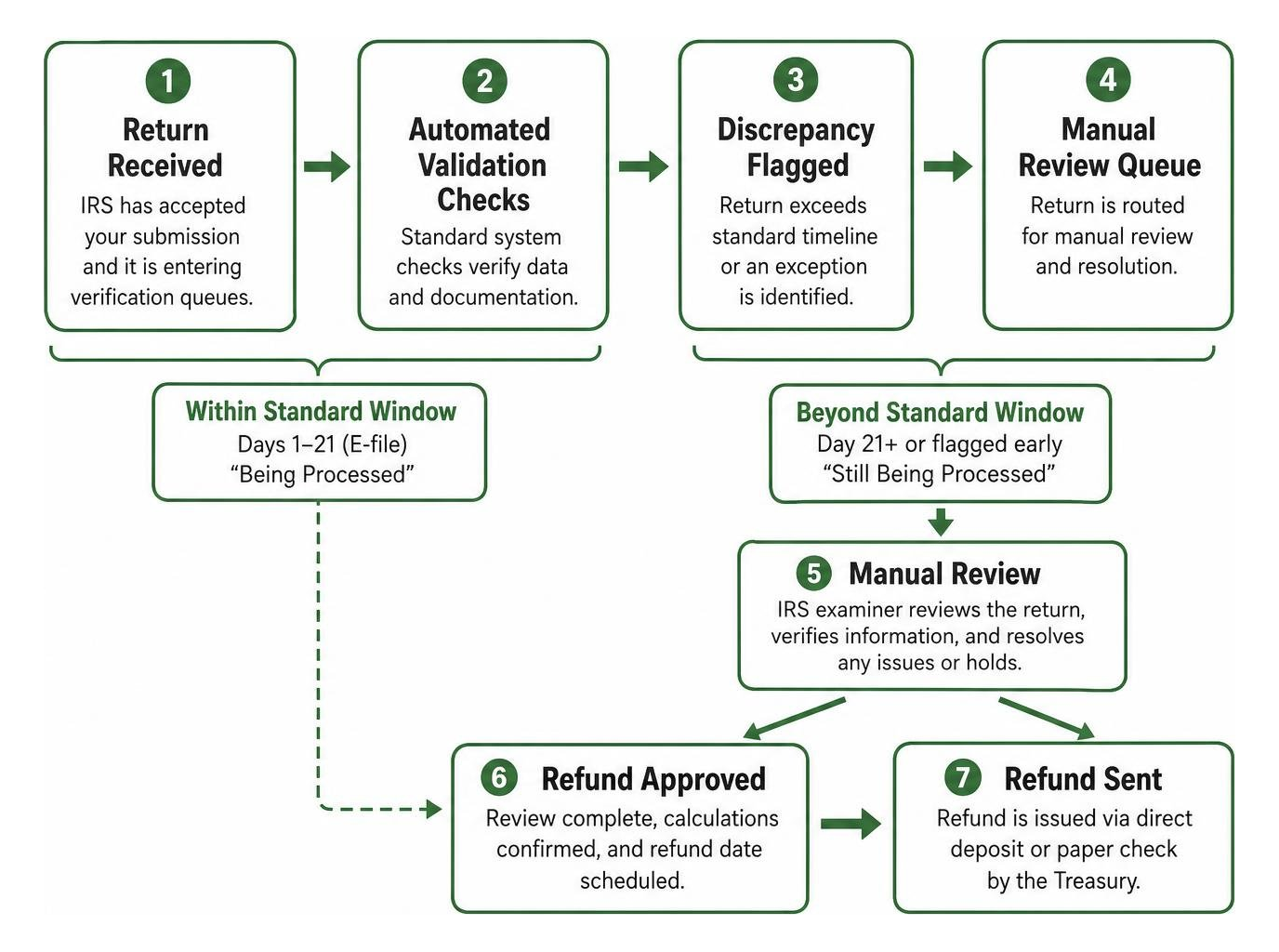
When you log into the IRS tracking portal, seeing an ambiguous message can feel unnerving. In plain terms, understanding the phrase relates directly to where your paperwork sits inside the federal pipeline. Learning how your federal tax return moves through the IRS machine reveals that an e-filed return must pass initial electronic authentication before entering the agency’s Master File.
Once your return posts to the Entity Transaction Section of the IRS database, automated systems review wage statements, deduction thresholds, and withholding records. If every electronic check clears without human intervention, the tracker transitions smoothly to an approved state. However, when an account gets shifted into a secondary review queue, the status updates to notify the taxpayer that processing is still underway.
Taxes Still Being Processed Meaning vs. Return Being Processed
While these two phrases look almost identical, they represent distinct administrative stages within the IRS system:
| Status Phrase | Processing Window | Meaning & Operational Context | Action Required? |
|---|---|---|---|
| “Being Processed” | Days 1–21 (E-file) | Return received; undergoing standard automated validations within normal processing windows. | No; check back weekly. |
| “Still Being Processed” | Day 21+ (or flagged early) | Return has exceeded the standard timeline or encountered an exception requiring manual review or statutory holds. | Only if an IRS notice is received or 21+ days have passed. |
“Being Processed” indicates standard progress within the standard 21-day window. In contrast, “Still Being Processed” often appears when the processing cycle exceeds initial estimates or when an automated check diverts the return for manual handling.
Core IRS Status Definitions: Received, Approved, and Sent
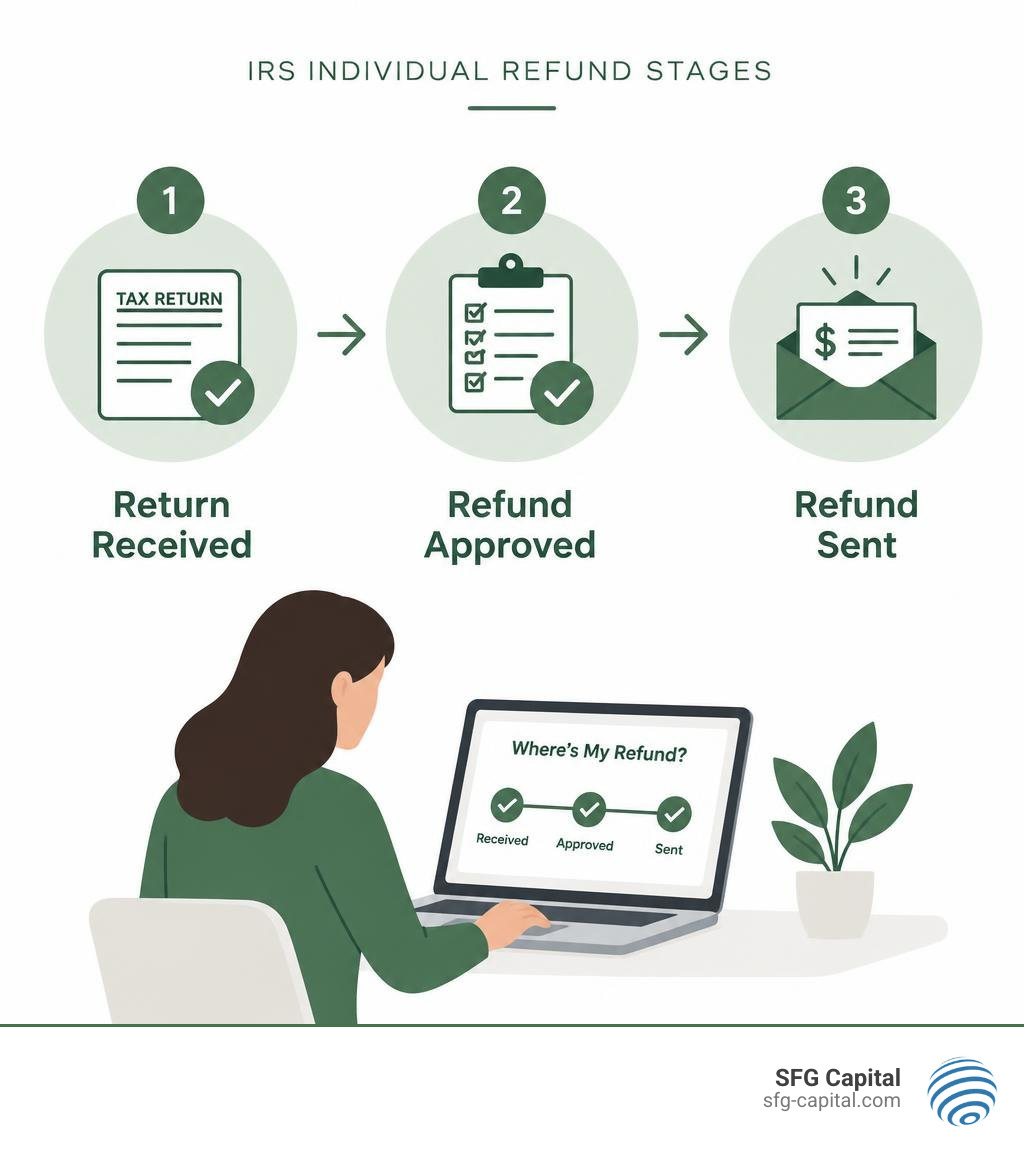
The IRS tracking system uses three primary milestones to communicate your refund progress:
- Return Received: The agency has officially accepted your electronic transmission or opened your paper envelope. It is currently moving through verification queues.
- Refund Approved: Review is complete, calculations are confirmed, and an official refund date has been scheduled.
- Refund Sent: The treasury has transmitted an electronic deposit to your financial institution or mailed a paper check.
Understanding these milestones clarifies the steps from filing to final payment. If you want to know when your funds will arrive, review the steps from e-file to bank account refund timeline to track each phase of disbursement.
Top Reasons Your Tax Return Remains in Processing Limbo

A delay does not automatically mean severe trouble. Learning the common reasons for slow tax refunds can help identify why your submission is taking longer than usual.
Common triggers that pause automated processing include:
- Clerical & Math Errors: Transposing numbers, entering an incorrect Social Security Number (SSN), or miscalculating standard deduction amounts.
- Income Reporting Mismatches: Discrepancies between income reported on Form 1040 and third-party documents submitted by employers (Form W-2) or clients (Form 1099).
- Refund Offsets: Outstanding federal obligations, past-due state taxes, or unpaid child support collected through the Treasury Offset Program.
Tax Topic 152 and Taxes Still Being Processed Meaning
Many filers see a reference to Tax Topic 152 alongside their pending status. Reviewing the IRS Tax Topic 152 Guidelines shows that this is an informational notice regarding general refund procedures, electronic filing, and direct deposit timelines.
Topic 152 is neutral; it simply confirms that your return is being processed. It may temporarily disappear during overnight system refreshes or when your file moves between administrative queues, and it will eventually be replaced by transcript code 846 once your refund is approved.
Special Holds: PATH Act, Identity Verification, and Audit Screening
Statutory rules and security safeguards can also extend processing times:
- The PATH Act: Under federal law, returns claiming the Earned Income Tax Credit (EITC) or Additional Child Tax Credit (ACTC) are held until at least February 15 to prevent fraudulent claims.
- Identity Verification: If the IRS detects unusual account activity, it issues letters such as Letter 5071C or Letter 4883C requiring you to verify your identity online or by phone. Once verification is complete, processing typically takes up to nine weeks.
- Audit Screening & Pre-Refund Reviews: Notices such as CP05 indicate your return is undergoing income or credit verification. If your return is held up by these checks, knowing what to do when your tax return is stuck in processing limbo can help you respond effectively.
Expected Processing Timelines for Federal and State Returns

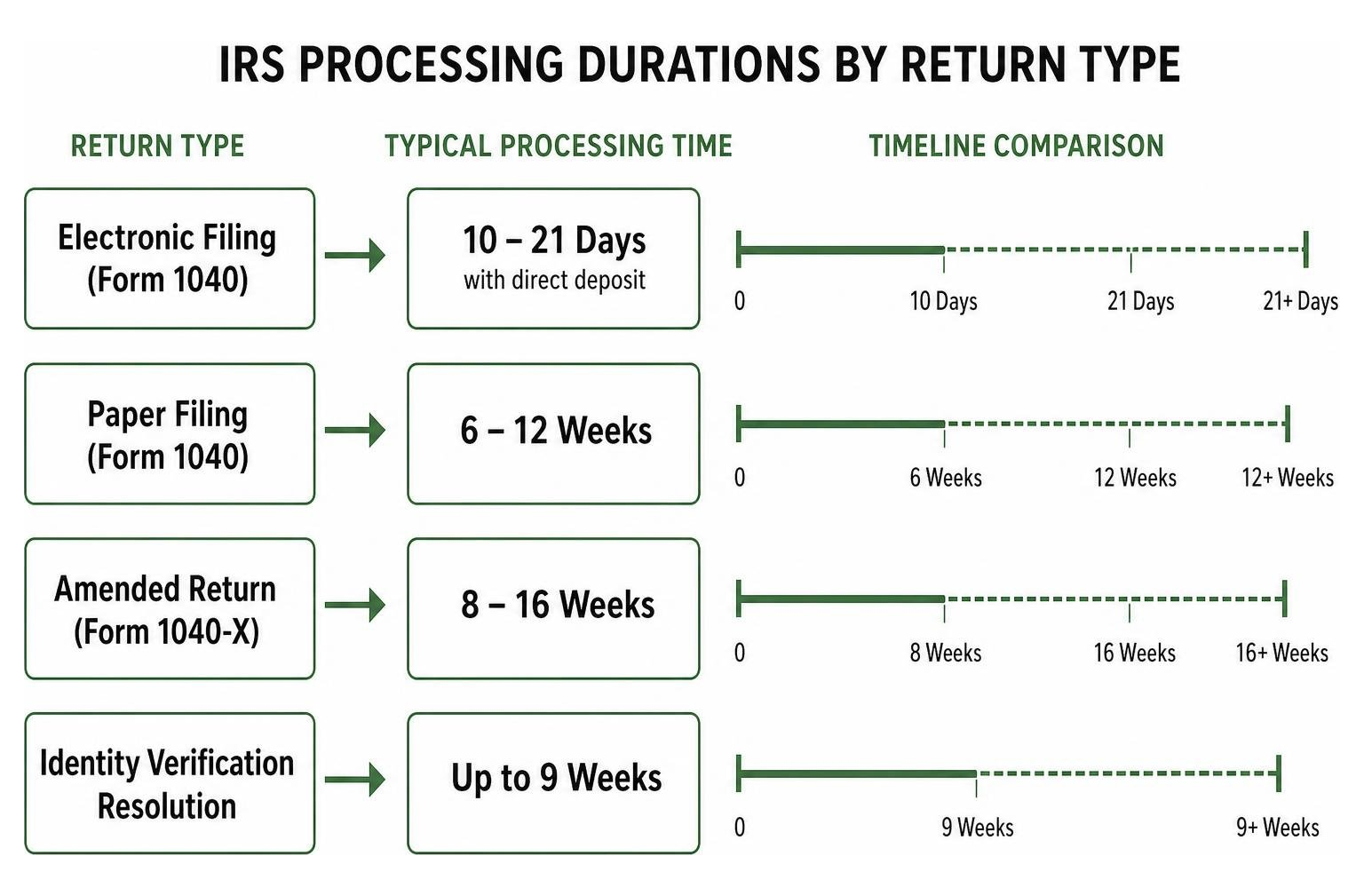
Timelines vary significantly depending on your filing method and the forms submitted. Determining how long after filing taxes you get your refund depends heavily on whether you choose electronic submission or traditional mail.
Standard Turnaround Times by Filing Method
- Form 1040 Electronic Filings: Generally processed within 21 calendar days when paired with direct deposit.
- Paper Filings: Typically require six to eight weeks, and up to twelve weeks during peak filing periods due to manual data entry.
- Amended Filings (Form 1040-X): Require dedicated review and take eight to sixteen weeks.
You can verify current agency turnaround times directly via the IRS Form Processing Timelines page. State tax agencies operate on independent schedules, meaning your state refund may arrive before or after your federal payment.
Business Return Backlogs and Specialized Tax Credits
Business tax filings often face distinct processing timelines compared to individual returns. Form 941 filings and amended payroll returns undergo detailed validation procedures. When managing extended wait times, understanding and overcoming refund delays is critical for accurate cash-flow planning.
Step-by-Step Action Plan When Your Refund Is Delayed
Repeatedly checking your status will not speed up the IRS system. Instead of constantly checking, stop refreshing the page and learn how to check your refund status through official tools that update once daily.
To diagnose a delay, pull your official account transcript from your IRS online account and review common transaction codes:
- Code 150: Return filed and tax liability established.
- Code 570: Additional liability or processing hold placed on the account.
- Code 971: Notice or correspondence sent to the taxpayer.
- Code 846: Refund approved and scheduled for issue.
Before contacting tax authorities, organize the following documentation:
- A complete copy of your filed federal and state returns.
- All Form W-2, 1099, and schedule supporting documents.
- Exact refund figures and direct deposit account details.
- Any physical letters or notices received from the IRS.
How to Check Status Without Triggering Errors
Use only official tools, such as the Where’s My Refund? portal or the IRS2Go mobile app. You will need your Social Security Number, filing status, and exact refund amount.
Never submit a duplicate return to speed up processing. Submitting a second return creates system conflicts, flags your account for potential fraud, and can add months to your wait time.
When and How to Contact the IRS Directly
Only contact telephone assistance at 800-829-1040 if:
- More than 21 days have passed since you e-filed.
- More than six weeks have passed since you mailed a paper return.
- The tracking tool displays an explicit message instructing you to call.
If an unresolved delay causes severe financial hardship, you may qualify for assistance through the independent Taxpayer Advocate Service.
Frequently Asked Questions About Processing Statuses
How long can a tax return stay in “still being processed” status?
Most e-filed returns resolve within 21 days. However, if flagged for manual review, the status can persist for 45 to 120 days depending on the complexity of the review.
Does “still being processed” mean my return is being audited?
No. The message simply means processing is taking longer than standard automated timelines. A formal audit requires official written notice (such as letter CP75) sent via standard mail.
Why did Tax Topic 152 disappear from my refund tracker?
Topic 152 often disappears during overnight system updates or when a return transitions between verification queues. It typically reappears once the update is finalized.
Conclusion
A “taxes still being processed” status is a common part of the filing season. Most delays stem from standard administrative verifications, statutory credit holds, or simple clerical mismatches rather than formal audits. Staying organized, monitoring your account transcript, and following standard waiting periods will help you navigate the process smoothly.
For business owners in Travis County navigating complex payroll adjustments and extended federal wait times, our team at SFG Capital helps companies bypass IRS processing backlogs with tailored advances and claims assistance. Explore SFG Capital’s specialized financial services to learn how we can support your business’s capital needs.
See what your business may qualify for.
60 seconds. No documents. No upfront cost.
General information only, not legal or tax advice. Eligibility and estimates are fact-specific and subject to review.