
Blog / Insights
InsightsEverything you need to know about taxes still processing 2026
November 10, 2026 · 8 min read · By the SFG Capital team
Why Taxes Are Still Processing in 2026
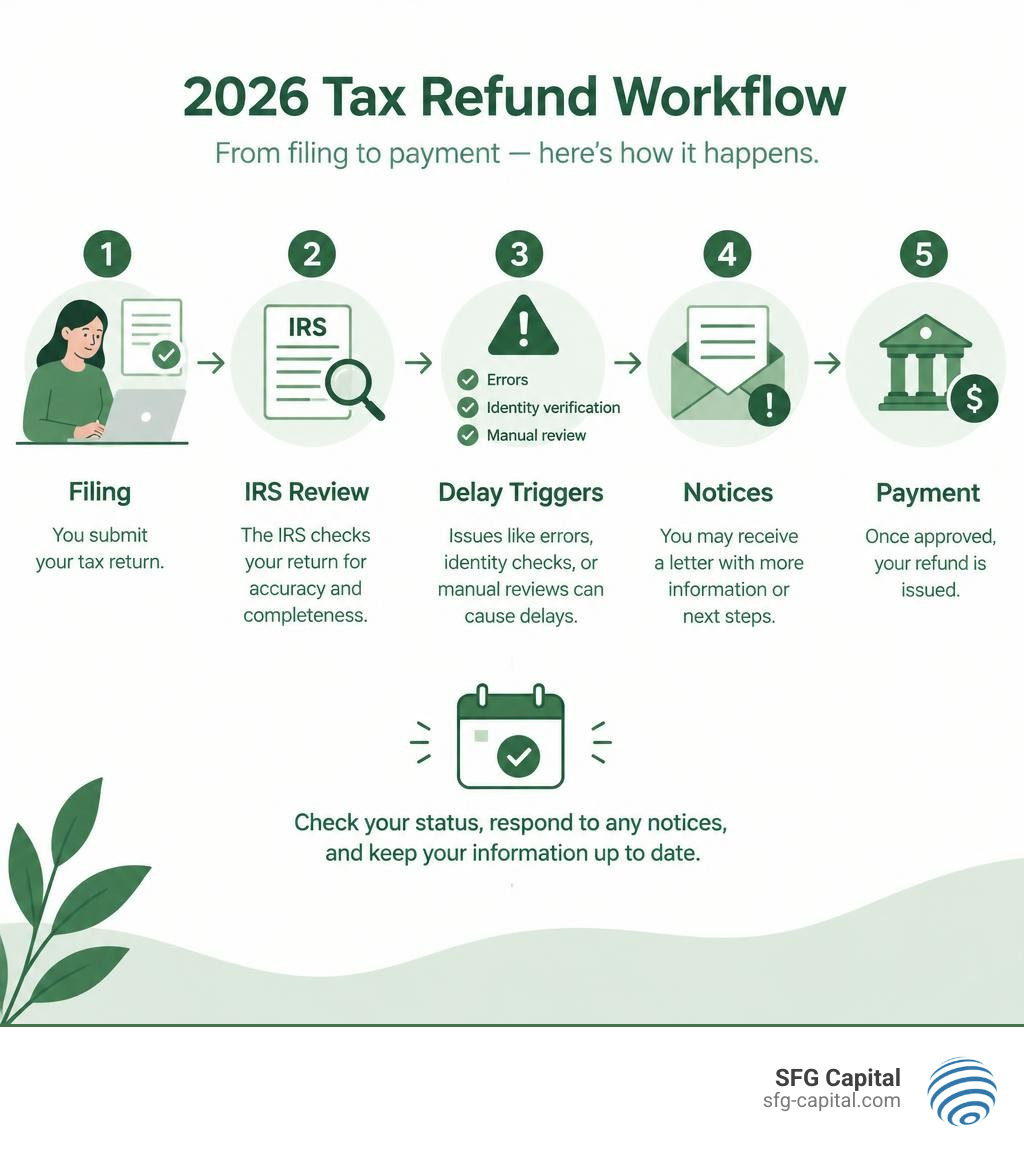
If your taxes are still processing in 2026, the IRS may need to review a paper return, fix an error, verify your identity, or complete another manual check. For an individual refund, check Where’s My Refund? and respond to any IRS notice. Do not file a second return just because the first is delayed. Most electronic refunds are issued within 21 days, but that timeline does not apply to Employee Retention Credit (ERC) claims.
For a delayed ERC claim, review your IRS notices and business tax account for requests or changes. A long wait alone does not tell you whether the claim has been approved.
I’m Santino Battaglieri, founder of SFG Capital, with more than nine years of experience in financial services. In this guide to taxes still processing 2026, I draw on SFG Capital’s experience funding over $500 million in ERC claims to help Travis County business owners understand what to check next.
Handy taxes still processing 2026 terms:
- taxes still being processed meaning
- refund still being processed
- how long after tax return is processed to get refund
Why Taxes Are Still Processing in 2026 for Millions of Taxpayers
As we navigate November 2026, millions of filers are asking why their returns remain stalled. While the IRS successfully processed nearly 139 million individual returns and issued over 90 million refunds this year, a massive subset of taxpayers remains trapped in limbo. More than 14 million individual income tax returns were suspended during processing in the 2026 filing season. Furthermore, over one million taxpayers did not receive their funds within normal timeframes, enduring an average delay of five and a half weeks.

A major driver behind these hold-ups is an expanding manual processing inventory, which climbed by roughly 17% this year. When automated validation fails, human intervention becomes mandatory. Understanding how your federal tax return moves through the IRS machine reveals how small discrepancies can trigger long administrative detours.
Behind these operational bottlenecks sit severe structural resource constraints. Staffing reductions across key divisions—compounded by departures of experienced technical personnel and persistent appropriations freezes holding agency funding at 2023 levels—have limited processing speed. Consequently, manual review units are heavily backlogged. For comprehensive insights on general filing schedules, review when will your tax refund arrive? What to know this tax filing season.
Primary Bottlenecks When Taxes Still Processing 2026 Cause Extended Delays
When automated screening filters flag potential identity mismatches or discrepancies in wage reporting, returns are routed out of the standard digital queue. Identity theft verification protocols remain the single largest bottleneck for delayed returns. Identity theft victim assistance cases now take an average of 20 months (roughly 600 days) to close, leaving over half a million unresolved cases pending.
When a return is flagged for suspected identity theft, filers are directed to authenticate their records through the Taxpayer Protection Program (TPP). However, telephone assistors on the specialized TPP line answered only 19% of incoming calls during the season. If you are struggling with a suspended return, you can read more about what happens when the IRS is holding my refund for review and I need answers.
Impact of Government Shutdowns and Budget Freezes on Processing
Operational capacity in 2026 was further constrained by federal budget uncertainty and staffing freezes. While automated electronic filing ingestion and direct deposit systems continued uninterrupted during temporary funding gaps, services requiring human intervention suffered immediate backlogs.
Paper filings, complex corporate returns, amended filings, and fraud reviews faced the steepest slowdowns. When agency capacity is restricted, personnel are shifted toward basic digital processing, leaving problem cases to accumulate on desk queues. For an analysis of agency operational limits during funding gaps, see government shutdown could slow some income tax refunds, says IRS.
Federal vs. State Return Delays: IRS Backlogs and System Modernization
Refund delays in 2026 are not limited to federal accounts. Several state revenue agencies rolled out comprehensive platform upgrades this year, resulting in temporary processing freezes and backlogs that mirrored federal hold-ups. Understanding these distinct state-level issues is essential for navigating the 2026 IRS refund backlog across jurisdictions.

IRS Paper Form Processing Schedules for Late 2026
For filers who submitted paper documentation, the IRS works through paper returns in sequential intake batches. As of November 2026, the agency is actively processing:
- Form 1040 (Original Individual Returns): Paper forms received in October 2026.
- Form 1040-X (Amended Individual Returns): Submissions received in July 2026.
- Form 1120 Series (Original Corporate Returns): Paper forms received in October 2026.
- Form 1120-X (Amended Corporate Returns): Submissions received in August 2026.
- Forms 2848 and 8821 (Power of Attorney and Authorizations): Processed within 2 business days of receipt.
If your paper return was postmarked earlier in the year and has not been acknowledged, it is likely awaiting manual data transcription. Filers looking into these timelines can explore why your 2026 IRS refund might be taking extra time.
State-Level Refund Delays in Michigan and Maryland
State-level system upgrades generated noticeable processing delays across several jurisdictions this year:
- Michigan: Following a major transition to the GenTax software system, manual review backlogs emerged. While the state processed over 5.2 million individual income tax returns and issued $3.59 billion in refunds, nearly 95,000 on-time filers were still waiting for their money deep into the summer. Michigan pays statutory interest on refunds held beyond the standard processing window. For more details, see many still waiting on Michigan tax refund nearly 4 months after filing deadline.
- Maryland: The state initiated a transition to the Maryland Tax Connect system for individual filers, leading to processing pauses from late July through its launch on September 1, 2026, during which acknowledgments and payment reconciliations were queued.
Direct Deposit vs. Paper Filing: Comparing Refund Timelines in 2026
The processing method you select remains the single largest factor determining refund speed. The IRS aims to issue more than 80% of direct deposit refunds in under 21 days, whereas paper filings require manual transcription that takes months.
| Filing & Disbursement Method | Typical Processing Timeline | Primary Delay Risks |
|---|---|---|
| E-File + Direct Deposit | 10 to 21 Days | Identity flags, credit verification (EITC/ACTC), bank account mismatches |
| E-File + Paper Check | 4 to 8 Weeks | Postal delays, address changes, check re-issuance protocols |
| Paper Form + Paper Check | 12 to 15+ Weeks | Manual intake queue, transcription errors, missing signatures |
| Amended Returns (1040-X / 1120-X) | 16 to 20+ Weeks | Manual review backlog, supporting schedule reconciliation |
The federal push to phase out paper checks has accelerated direct deposit adoption, with over 98% of refunds distributed electronically. However, unbanked taxpayers and those with limited internet access face challenges navigating manual exception workflows. We break down these procedural shifts in our direct deposit and delays: the 2026 IRS survival guide.
Resolving CP53E Notices and Missing Banking Information
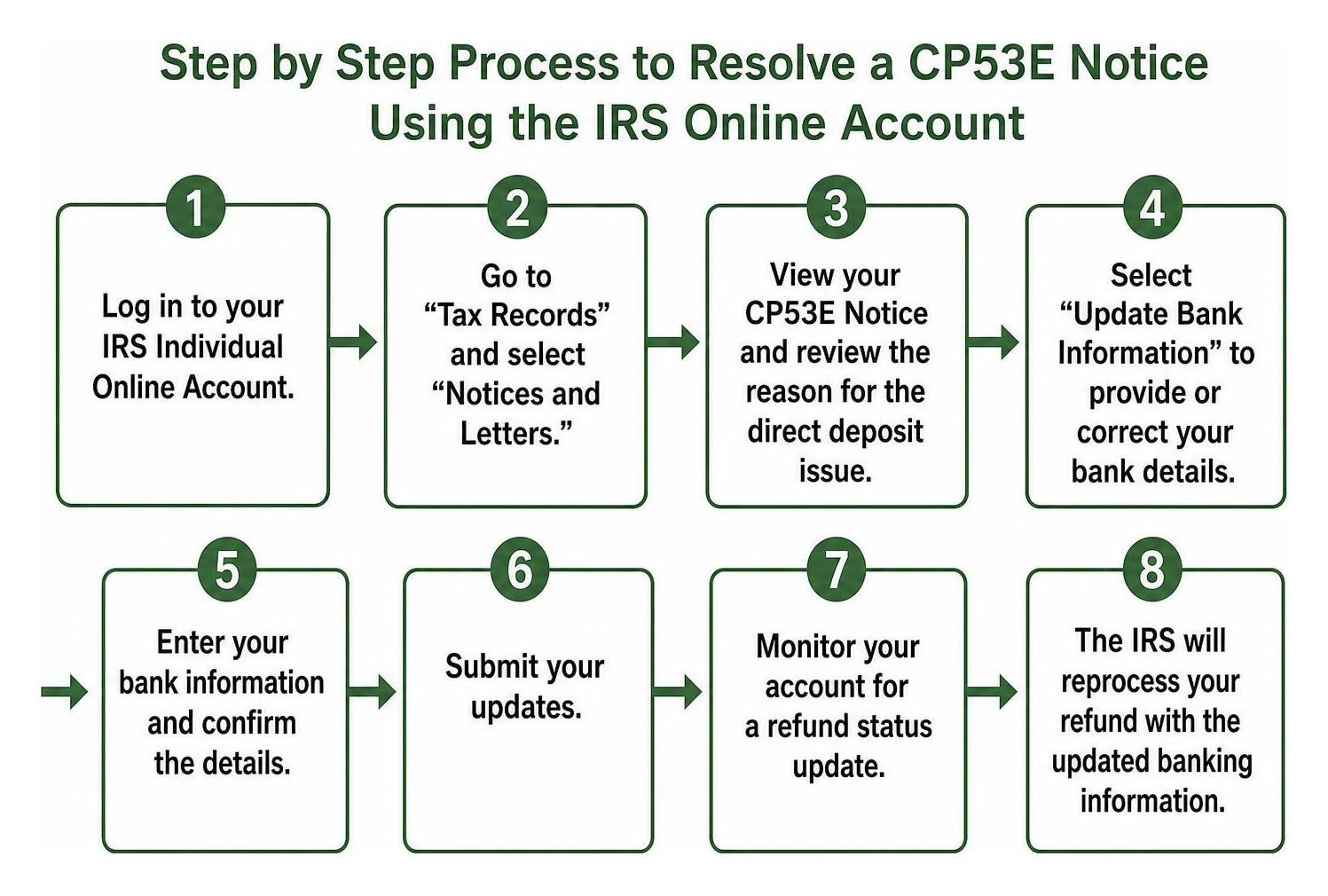
A frequent cause of stalled disbursements is the IRS CP53E Notice, which informs a filer that direct deposit information was missing, rejected, or invalid. When this notice is generated:
- Log into your IRS Individual Online Account.
- Navigate to Profile, select Banking Information, and click Add Bank Account.
- Enter and verify your routing and account numbers within the 30-day response window.
If no action is taken within 30 days, the IRS defaults to issuing a paper check six weeks after the notice date. For a deeper look at these statuses, read our guide on what taxes still being processed actually means for you.
Action Steps and Recourse for Stalled Tax Returns
If your return is stalled beyond standard timelines, taking systematic diagnostic steps is essential:
- Check Online Status: Use the Where’s My Refund? portal or the IRS2Go mobile app with your Social Security number or ITIN, filing status, and exact refund amount.
- Pull Account Transcripts: Access your online tax transcript to view internal transaction codes (such as Code 570 for additional review or Code 810 for refund freezes).
- Telephone Support Limits: The IRS received 48.1 million calls during the 2026 filing season, but live telephone assistors answered only 9.9 million calls (a 21% answer rate). Average wait times hovered around 14 minutes when callers connected.
- Taxpayer Assistance Centers (TAC): In-person support saw reduced access, as the number of fully staffed TAC locations declined from 102 to 42 nationwide.
- Taxpayer Advocate Service (TAS): Filers facing significant financial hardship or delays exceeding normal timeframes without agency communication may qualify for TAS case advocacy.
For a practical breakdown of how to respond when your refund is delayed, explore the 21 day itch: what to do when your refund is MIA.
What to Do When Taxes Still Processing 2026 Status Stalls Your Refund
When your account displays a static status message for months, avoid submitting a second return. Submitting duplicate returns resets the manual review timeline and can trigger fraud filters. Instead, verify whether your transcript exhibits missing tax topics or specific administrative holds, as detailed in our analysis of the mystery of the missing tax topic and other refund delays.
Frequently Asked Questions About 2026 Tax Delays
How long should I wait before contacting the IRS about a delayed refund?
For electronically filed returns requesting direct deposit, wait at least 21 days before attempting to contact the IRS. For paper-filed returns, allow at least six weeks from the mailing date before checking for transcript updates, as manual intake queues operate on multi-month schedules.
What does the “Still Being Processed” status mean on Where’s My Refund?
The “Still Being Processed” notice indicates that your return has exited the automated pipeline and requires manual staff review. Common triggers include identity verification checks, wage and withholding reconciliation against employer Form W-2 records, math error adjustments, or validation of refundable credits such as the Earned Income Tax Credit (EITC) or Child Tax Credit (CTC).
Does the IRS pay interest on delayed 2026 refunds?
Yes. Under federal statutory guidelines, if the IRS does not issue your refund within 45 days of the April 15 filing deadline (or the date you filed, whichever is later), the agency is legally required to pay interest on the overpayment amount. State agencies have similar interest rules; for example, North Carolina and Michigan both issue interest payments when processing exceeds their statutory windows.
Conclusion
The 2026 tax landscape presents unique challenges, from identity theft backlogs to manual processing delays for paper returns. While individual filers must monitor online tools and respond promptly to IRS notices, business owners face distinct hurdles with specialized payroll tax credits.
For business owners in Travis County waiting on substantial payroll credits, IRS delays create cash flow constraints. SFG Capital helps Travis County businesses bypass IRS processing delays on Employee Retention Credit (ERC) claims. We offer advances and buyouts backed by professional claim assistance and performance-based fee structures, allowing you to access working capital without waiting on federal review backlogs. Learn more about our funding solutions by visiting SFG Capital Business Services.
See what your business may qualify for.
60 seconds. No documents. No upfront cost.
General information only, not legal or tax advice. Eligibility and estimates are fact-specific and subject to review.